 Add text to get the translation that 22 AI models agree on


What you actually need to translate a death certificate
A death certificate is one page. What depends on it rarely is. An estate can't be settled, a life insurance claim can't be paid, and a probate case can't move forward until the document is not only translated, but translated in a way the receiving institution will actually accept.
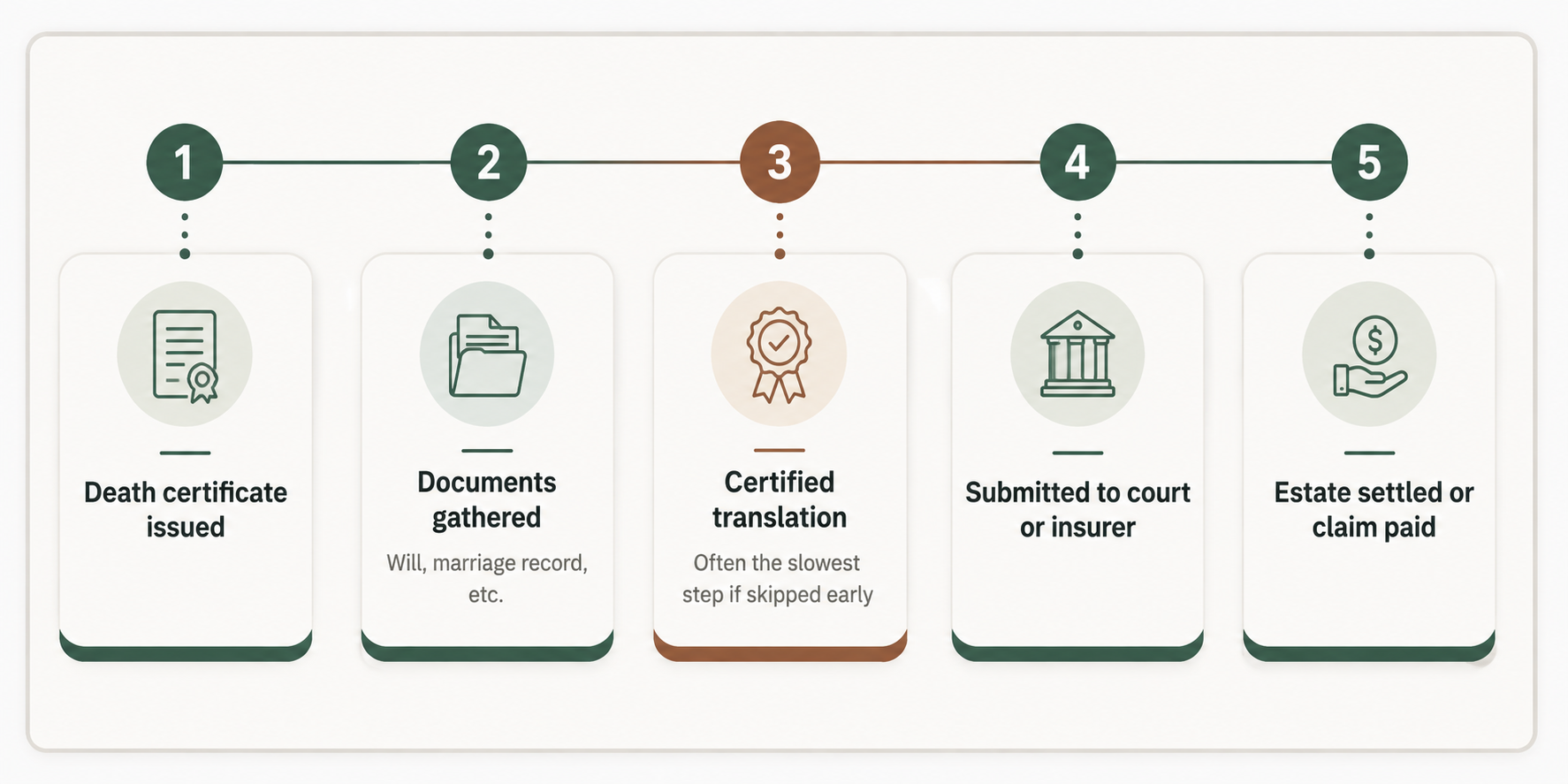
Translation is step three of five in a typical cross-border estate process, but it's the step most often left until the last minute, and the one most likely to cause a delay if it's not done to the receiving institution's specific standard. That's the part most people don't realize until they're already in the process: the words matter less than whether the translation carries the right certification for the specific institution asking for it.
Why courts and probate offices require certification
Courts, probate offices, insurance companies, and immigration authorities generally won't accept a death certificate translated by a family member or a general translation tool, even if the translation itself is accurate. What they're asking for is a signed statement from an independent translator confirming the translation is complete and accurate, so there's someone accountable for it if a question comes up later. Under federal regulation 8 CFR 103.2(b)(3), that certification, not a government license, is what USCIS and most federal processes require.
What probate and inheritance actually require
This is the part most general guides skip. If you're settling an estate across two countries, the probate court or estate administrator typically needs the death certificate translated into the language the proceedings are conducted in, not the language of the deceased's home country.
1. Confirm the receiving court's specific requirements. Some probate courts require certification only; others require notarization on top of it. This varies by jurisdiction, so it's worth confirming directly rather than assuming.
2. Check whether an apostille is also needed. An apostille authenticates the original document for use in another country. It's a separate step from translation, and probate cases involving international estates often need both.
3. Translate supporting documents alongside it. A will, a marriage certificate, or property records tied to the estate may need translation too. Handling them together avoids a second round of delays later.
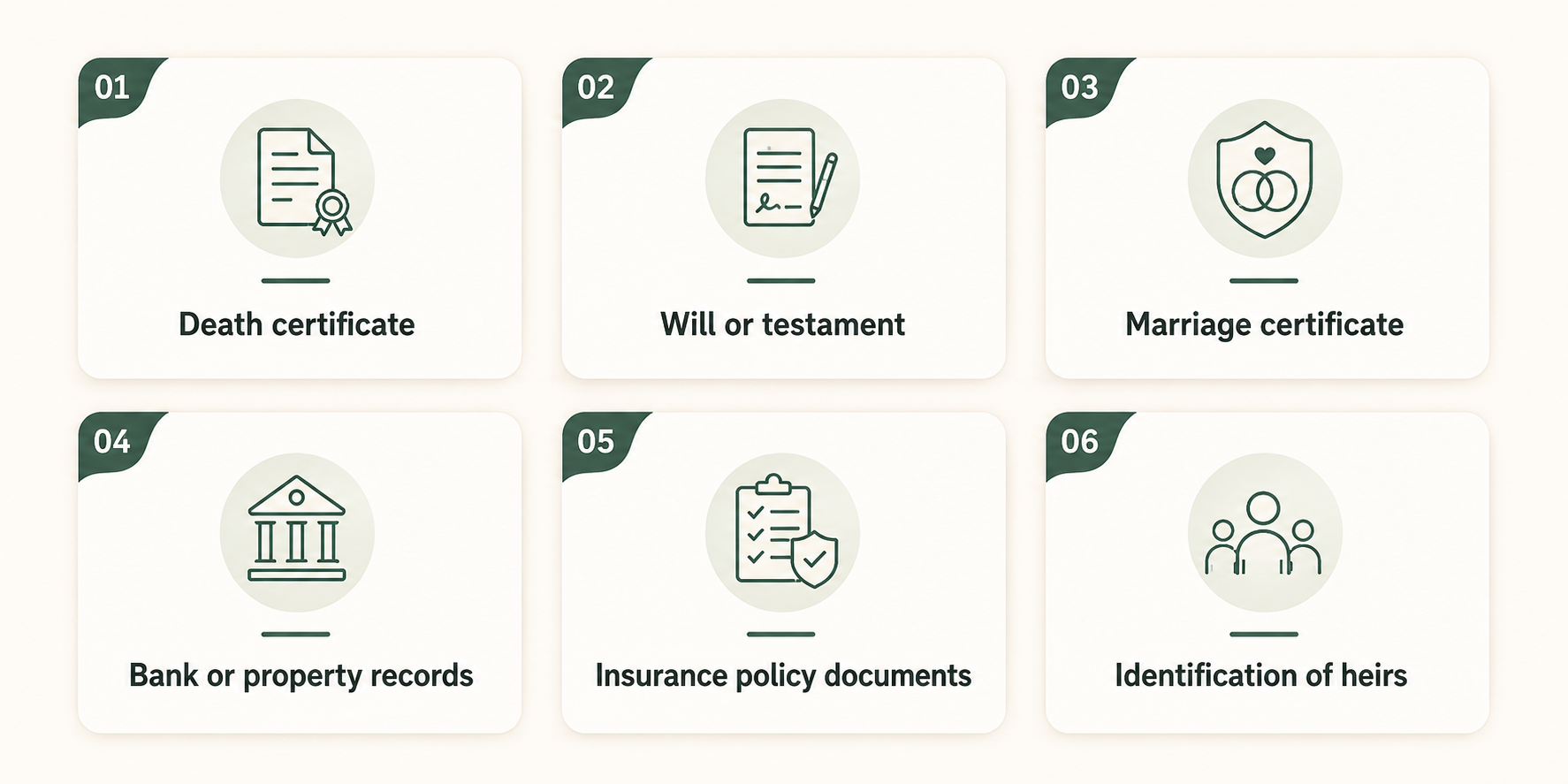
These are the documents that most often accompany a death certificate in a cross-border estate case: the will itself, a marriage certificate if a spouse is inheriting, bank or property records tied to the estate, insurance policy documents for a claim, and identification documents for the heirs involved. Translating all of them under the same certification standard, at the same time, is usually faster than translating the death certificate first and discovering the others are needed later.
Insurance claims follow a similar logic to probate: the insurer needs the certificate in a language its claims team can process, and a missing or informal translation is one of the more common reasons a claim gets delayed rather than denied outright.
Certified vs. Notarized: What's the actual difference
| Certified translation | Notarized translation |
|---|---|
| Includes a signed statement from the translator confirming accuracy and completeness | Includes everything a certified translation has, plus a notary's confirmation of the translator's identity |
| Sufficient for most immigration, court, and probate purposes | Required by some institutions specifically, worth confirming before ordering |
| Focuses on the accuracy of the translation itself | Focuses on verifying who signed the certification |
Neither one is "better" than the other in the abstract, they answer different questions. Certification says the translation is accurate. Notarization confirms who's standing behind that statement. Most institutions ask for one or the other, rarely both, but it's worth confirming rather than assuming.
1. Is this for USCIS or another federal immigration process? A certified translation alone is sufficient. Notarization is not required under 8 CFR 103.2(b)(3).
2. Is this for a state court or probate proceeding? Many state courts require both a certified and notarized translation. Confirm directly with the specific court, since this varies by state.
3. Is the original document from outside the country where it will be used? An apostille on the original document may also be required, separately from the translation itself, before the certified translation is accepted.In short: USCIS and most federal processes accept certification alone. State courts and probate proceedings often require both certification and notarization. International cases may need an apostille on top of either. The safest step is always to confirm directly with the specific receiving institution before ordering, since "it depends on where you're sending it" is the honest answer here.
The most common mistakes on a translated death certificate
- Summarizing instead of translating in full. Every field, stamp, and seal on the original needs an English counterpart, even sections that seem administrative or repetitive.
- Missing the certification statement entirely. A linguistically accurate translation without the signed statement of accuracy is often rejected outright, regardless of quality.
- Formatting that doesn't mirror the original. A translation that reorganizes the layout can create confusion for an official comparing it against the source document.
- Assuming one translation covers every use case. A translation accepted by a bank for an insurance claim isn't automatically accepted by a probate court if that court requires notarization and the bank didn't.
Getting it right the first time
Since a death certificate is usually one part of a larger, often time-sensitive process, inheritance, probate, or an insurance claim, a delay caused by a rejected translation is rarely just an inconvenience. It's worth confirming the receiving institution's exact requirement (certified, notarized, or both) before ordering, rather than after.
Tomedes provides certified death certificate translation with a signed statement of accuracy included as standard, and notarization available where the receiving institution requires it. Every certified translation is backed by ISO 17100:2015 certification and a 1-Year Quality Guarantee. Related personal documents, including birth certificates and marriage certificates, follow the same certification standard when they're needed alongside an estate or immigration filing.
FAQs
Q: How much does it cost to translate a death certificate?
A: Cost typically depends on the language pair and turnaround time rather than the document's length, since a death certificate is short. A certified translation generally costs more than an uncertified one because it includes a signed statement of accuracy from the translator.
Q: Can I translate a death certificate myself?
A: Most institutions, including USCIS, courts, and probate offices, do not accept a self-translated document, even if you are fluent in both languages. The translation needs to be certified by an independent, qualified translator with no personal stake in the outcome.
Q: What is the difference between a certified and a notarized death certificate translation?
A: A certified translation includes a signed statement from the translator confirming accuracy and completeness. A notarized translation adds a notary's confirmation of the translator's identity on top of that statement. Many institutions only require certification; some require both, so it's worth confirming before ordering.
Q: Do I need a certified translation of a death certificate for probate?
A: In most cases, yes, if the original death certificate isn't in the language the probate court or estate administrator works in. Requirements vary by jurisdiction, so it's worth confirming directly with the specific probate court or institution handling the estate.

Written by Ofer Tirosh
Connect on LinkedInOfer founded Tomedes in 2007 and now leads the company's push to combine two decades of human translation expertise with AI. He writes about where the language industry is actually heading and the shifts nobody's ready for, the bets that paid off, and the ones that didn't.
Share:

Post your Comment