 Add text to get the translation that 22 AI models agree on


Why we pivoted from being just a "translation company" to being an "AI-enabled language solutions provider"
For seventeen years, Tomedes built its reputation as a professional translation company. That framing served us well — and then, quietly, it started working against us. Not because the work changed. The quality, the linguists, the ISO certifications, the 120,000+ clients: none of that changed. What changed was how the people who needed us were looking for us.
By early 2026, the data was clear enough that we could not rationalize it away. Search queries for "translation company" and "professional translation services" (the terms that had driven the top of our funnel for years) were declining in commercial quality. Meanwhile, queries for "AI translation," "AI-enabled language services," and "human-reviewed AI translation" were growing. Google was intercepting more and more of the traditional language queries with its own translation widget, answering the basic question before a user ever reached a search result. The clients still looking for a professional service were increasingly framing their need in terms of AI.
We had two choices. Defend a brand position the market was moving away from, or get in front of where buyers were actually heading. This post is about what we decided and why — and what "AI-enabled language solutions" actually means in practice, rather than as a marketing phrase.
What did the market data actually show us?
The signal we were watching most closely was commercial query quality — not traffic volume, but the proportion of search visitors who showed genuine purchase intent. By mid-2026, that figure had dropped significantly from where it had been twelve months prior.
Commercial queries are declining in quality, not just quantity.
Two forces were driving this simultaneously. First, Google AI Overviews began answering generic translation queries ("English to German translation," "translate this phrase") directly in the search results, satisfying users' immediate need before they clicked through to any website. Second, the nature of the queries we were still receiving was shifting. Users searching for professional language services in 2026 were increasingly using AI-adjacent language: they wanted to know about AI post-editing, about how AI was being used in certified translation, about the difference between raw machine translation and a human-verified output.
The pattern was consistent enough that we named it explicitly in our strategy sessions: the buyers still looking for us were framing their need in AI terms, even when what they ultimately needed was human expertise at the center. The market had not abandoned the need for professional translation. It had changed the vocabulary it used to look for it.
Why did "translation company" stop being enough?
This is worth being precise about, because the answer is not that "translation company" became a bad description of what we do. It is that the phrase stopped signaling what today's buyers need reassurance about.
A client coming to Tomedes in 2026 is almost certainly already using some form of AI in their workflow. They may be using raw machine translation for internal documents. They may have a C-suite mandate to reduce translation spend by incorporating AI tools. They are not asking whether AI exists, they are asking whether the provider they choose understands how to use it responsibly and where human expertise still has to lead.
"Translation company" does not answer that question. It says nothing about AI capability, nothing about where human review happens in the workflow, and nothing about how quality is maintained when AI is part of the process. ISO 18587 (the international standard for machine translation post-editing) exists precisely because the industry recognized that AI translation requires a distinct quality framework, not just a faster version of traditional translation. Tomedes has held ISO 18587:2017 certification for this reason.
The phrase "AI-enabled language solutions provider" answers a different set of questions. It signals that AI is part of the methodology, that human expertise governs the output, and that the service is designed for clients who are operating in an AI-augmented environment. That is the reassurance today's buyer actually needs.
What does human-in-the-loop AI translation mean in practice?
The phrase "human-in-the-loop" has become common enough that it risks losing its meaning. For us, it has a specific operational definition.
When a translation project enters our workflow, AI is used at the appropriate stage for the content type: machine translation engines for high-volume, low-risk content; AI post-editing frameworks for content that needs speed and consistency but cannot afford errors; full human translation for legal, medical, certified, and high-stakes content where the liability of error is real. In every case, a qualified linguist is responsible for the final output. The AI does not release a deliverable without a human having reviewed and taken professional responsibility for it.
This is not a marketing position. It is an operational requirement enforced by our ISO certifications and our 1-Year Quality Guarantee. If an AI-assisted translation fails to meet the quality standard the client was promised, we are accountable — not the AI system that assisted in producing it. That accountability structure is what "human-in-the-loop" means in a contractual and professional sense, not just a philosophical one.
For clients with a C-suite mandate to adopt AI in their translation workflow, this model provides what raw AI tools cannot: measurable quality accountability at the point of delivery.
How does this change what Tomedes offers?
In practical terms, the pivot changes how Tomedes presents and prices its services more than it changes what those services are.
The quote process now leads with AI-enabled options as the default — not as an upsell or an alternative, but as the primary framing. When a client submits a project, the conversation starts with: here is how AI can handle this at scale, here is where human expertise is non-negotiable, and here is how we structure quality oversight across the workflow. Word-count-based pricing is being supplemented with quality-tier and workflow-based pricing that reflects the actual complexity of what the client needs.
For the clients Tomedes works with (organizations including Google, Microsoft, IKEA, and Amazon) this shift is not disruptive. Enterprise clients at that scale already understand that AI and human expertise coexist in professional language services. What they need from a provider is the operational maturity to manage that coexistence at volume and under deadline pressure. The brand language is catching up to a reality the enterprise market already recognizes.
For mid-market clients who are encountering this framing for the first time, the most useful frame is this: "AI-enabled" does not mean "AI only." It means the workflow is designed to use AI where it adds genuine efficiency without compromising the quality standard the project requires.
What doesn't change?
The pivot in brand language does not change the underlying commitments that have defined Tomedes since 2007.
Tomedes still operates in 270+ languages. The linguist network, the ISO certifications (17100, 18587, 9001), the 1-Year Quality Guarantee, and the 24/7 human support model are unchanged. Certified translation (for immigration documents, legal filings, academic credentials) still requires a human translator and a certified statement of accuracy. AI post-editing is appropriate for content where speed and cost efficiency matter; it is not appropriate for documents where the legal validity of the translation depends on a certified human professional's name and signature.
This distinction matters because one of the genuine risks of the industry's AI pivot is that the quality tier confusion it creates for buyers. When everything is labeled "AI translation," it becomes harder for a client to know whether they are getting raw machine output, AI-assisted human review, or full human translation with AI quality-checking. Tomedes' position is that clarity about what is happening in the workflow is part of the service, not a footnote.
Why is the hybrid model harder than it sounds?
Any translation provider can describe itself as "AI-enabled." The operational reality of building a hybrid model that actually works at scale is considerably more demanding.
It requires vendor management infrastructure that can distinguish between linguists qualified for AI post-editing versus those qualified only for human translation, and route projects accordingly. It requires quality assurance systems that can evaluate AI output before it reaches a human reviewer, flagging segments where the machine made errors that a less experienced editor might miss. It requires clear client communication about what methodology is being used for their specific project, at what price point, and with what quality guarantee attached.
At Tomedes, this infrastructure has been in development and refinement for years. The ISO 18587 certification is the external validation of that process. But the internal reality is that building a hybrid model that clients can trust requires ongoing investment in the people, processes, and tools that sit between the AI output and the final deliverable.
For buyers evaluating providers who claim to offer AI-enabled translation, the questions worth asking are direct: Who reviews the AI output? What is their qualification for that task? What happens to the project if the AI output fails a quality check? What is the provider's accountability structure if the delivered translation contains errors? Those questions separate operational claims from marketing language.
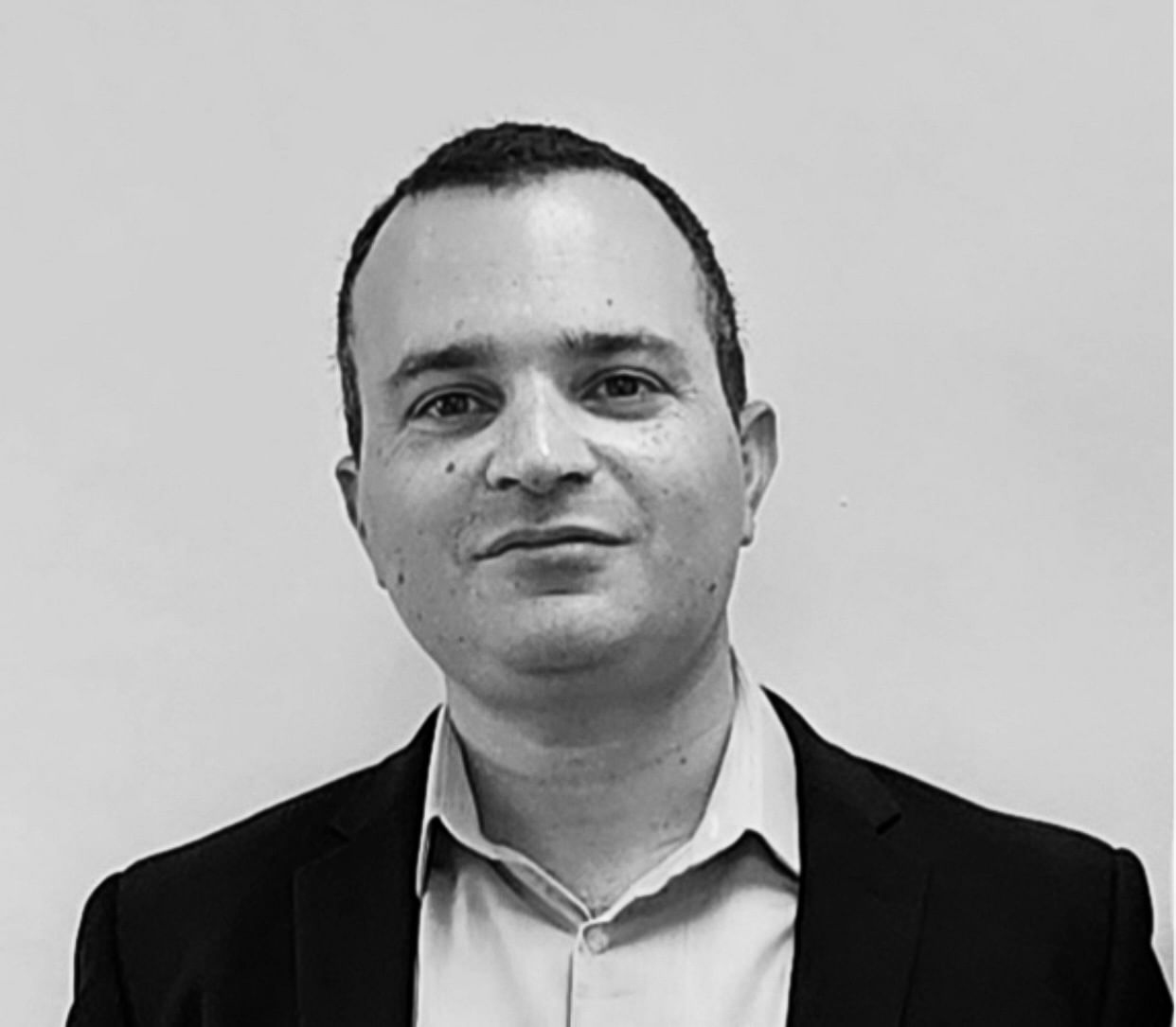
Written by Ofer Tirosh
Connect on LinkedInOfer founded Tomedes in 2007 and now leads the company's push to combine two decades of human translation expertise with AI. He writes about where the language industry is actually heading and the shifts nobody's ready for, the bets that paid off, and the ones that didn't.
Share:

Post your Comment