 Add text to get the translation that 22 AI models agree on


Arabic Dialect Translation: Which Arabic Do You Actually Need?
When a client orders "Arabic (Libyan) to English transcription and translation," they are not being pedantic. They have been burned before — they received a translation in Egyptian Arabic or Modern Standard Arabic, and the Libyan speaker on the receiving end could not fully understand it, or the content sounded foreign and unnatural. Arabic is not one language with regional accents. It is a family of varieties that differ in vocabulary, grammar, pronunciation, and cultural register to an extent that makes choosing the wrong one a genuine translation failure.
According to Wikipedia's Varieties of Arabic article, Arabic has 411 million native speakers across roughly 25 distinct dialect groups. Every one of those speakers grows up speaking a local dialect as their first language, and learns Modern Standard Arabic (MSA) (the formal written register) through schooling. The result is a population that lives entirely in dialect and accesses formal content through MSA. The practical consequence for translation: a document in MSA reaches the educated brain; a document in the right dialect reaches the person.
This guide covers the five major Arabic dialect groups, when MSA is and is not the appropriate choice, and exactly how to brief a translation agency so you get the Arabic your audience actually speaks.
Why does Arabic dialect selection matter so much for translation?
The short answer: because Arabic is diglossic. Diglossia means that speakers use two distinct varieties of a language for different purposes (a formal "high" variety and an informal "low" variety) and switch between them depending on context.
According to UCLA's Arabic Language Center, MSA is the literary, formally inflected standard written form used throughout the contemporary Arabic-speaking world. It is not anyone's native language. Every Arabic speaker grows up speaking a regional dialect at home, in the street, and in informal conversation. MSA is learned through schooling and used in newspapers, government documents, religious texts, academic writing, and formal broadcast media. The consequences for translation are significant.
A document translated into MSA is technically accessible to any literate Arabic speaker, but it reads the way a formal declaration sounds when you want a conversation. For marketing, community outreach, social media, consumer communications, medical patient materials, and any content designed to feel personal or immediate, MSA signals distance, formality, and foreignness. The reader understands it the way an English speaker understands a legal contract — technically, but not naturally.
Conversely, a document translated into the wrong dialect is worse than MSA. A Libyan audience receiving Gulf Arabic content does not just feel the formality — they encounter unfamiliar vocabulary, different pronunciation conventions, and sometimes grammar that diverges enough to impede comprehension. According to CMU research on Arabic dialects, Moroccan and Yemeni Arabic are mutually unintelligible as spoken languages — a fact that should calibrate any assumption that "Arabic is Arabic."
The result: dialect mismatch costs money. It forces rework. And when the content is medical, legal, or safety-critical, it creates real risk.
What is Modern Standard Arabic (MSA) and when should it be used?
Modern Standard Arabic is the standardized written form of Arabic used across all 22 Arabic-speaking countries as the language of formal writing, official government communications, news media, education, and classical literature. It is derived from Classical Arabic (the language of the Quran) but has been updated over centuries to accommodate modern vocabulary. No one speaks it as a mother tongue; everyone with formal Arabic education can read and write it.
According to Ethnologue and LingoBright's 2026 language statistics, Standard Arabic has approximately 335 million speakers and is unique because it is often learned after mastering a local dialect.
MSA is the right choice when:
The target audience spans multiple Arab countries and no single dialect dominates. Legal, financial, and official documents submitted to government bodies, courts, or regulatory authorities. Academic publications, formal reports, and research documents. News content, press releases, and broadcast journalism. Religious texts and any content referencing Islamic jurisprudence or scripture. Any document requiring certified translation for official use (immigration filings, court documents, academic credentials) uses MSA as the standard. Pan-Arab marketing campaigns where geographic reach matters more than regional cultural connection.
MSA is not a safe default when:
The target audience is a specific national or regional community with its own dialect. Consumer-facing content (packaging, advertising, social media, chatbot conversations) where natural language is essential to trust. Healthcare and mental health materials intended for patients who may not be highly educated or may have low literacy in formal Arabic. Any spoken or audio content including voice-overs, explainer videos, podcasts, or recorded instructions. Community outreach materials designed for specific Arabic-speaking diaspora communities in the United States, United Kingdom, or Europe, whose dialect identity is closely tied to their country of origin.
What is Egyptian Arabic and when is it the right choice?
Egyptian Arabic (Masri) is the most widely understood Arabic dialect in the world. According to Wikipedia's Egyptian Arabic article, it has approximately 84 million native speakers and is understood as a second dialect by approximately 35 million more (a total comprehension reach of around 119 million) largely because of Egypt's dominance in Arabic-language cinema, television, music, and media throughout the 20th century.
Cairene Egyptian Arabic, the dialect of Cairo, is the prestige variety and the default reference when people say "Egyptian Arabic." Other regional varieties exist within Egypt (Sa'idi Arabic is spoken in Upper Egypt and differs meaningfully from Cairene) but Cairene is the international standard for Egyptian content.
Egyptian Arabic is the right choice when:
The target audience is Egyptian, in Egypt or in the Egyptian diaspora globally. Consumer-facing content for a broad Arab audience where a single dialect must be chosen: Egyptian is the most recognizable and least marked variety across different Arab communities. Entertainment and media content including subtitles, scripts, dubbing, and voice-overs aimed at a general Arab audience. Social media campaigns targeting Egyptian users or pan-Arab communities where Egyptian cultural references will land naturally. Humanitarian and NGO content for communities with Egyptian origins.
Egyptian Arabic is not appropriate when:
The audience is Moroccan, Libyan, Algerian, Tunisian, or from any Maghrebi country. Despite Egyptian's wide media reach, Maghrebi audiences will immediately recognize it as not their variety, and culturally specific content will miss. The audience is specifically Gulf Emirati, Saudi, Qatari, Kuwaiti, or Omani — Gulf communities identify with their own variety, and Egyptian may read as condescending or misplaced in high-stakes contexts.
What is Gulf Arabic (Khaleeji) and when is it appropriate?
Gulf Arabic, known as Khaleeji (خليجي, meaning "of the Gulf"), is the dialect spoken across the Arabian Peninsula: Saudi Arabia, the UAE, Kuwait, Bahrain, Qatar, Oman, and Yemen. It is not a single uniform variety (Saudi Najdi Arabic differs meaningfully from Hejazi Arabic, and Omani Arabic has distinct features) but they share enough vocabulary and phonology to be grouped as a regional family.
According to Translinguist's Arabic dialects guide for business, Gulf Arabic is spoken in the economic powerhouses of the Middle East, featuring distinct phonetic characteristics and vocabulary influenced by maritime trade and Bedouin traditions. Gulf dialects also tend to preserve features of Classical Arabic more faithfully than Egyptian or Levantine varieties.
Gulf Arabic is the right choice when:
The target audience is in any Arabian Peninsula country — Saudi Arabia, UAE, Kuwait, Qatar, Bahrain, Oman. Business communications, contracts, and corporate content for Gulf-region clients or partners. Consumer content and marketing for UAE and Saudi markets, where Khaleeji is the authentic local voice. Financial services content targeted at GCC (Gulf Cooperation Council) markets. Employer communications for organizations operating in the Gulf.
According to the Tomedes Arabic translation service team, the Gulf Arabic market (particularly Saudi Arabia and the UAE) represents one of the most commercially significant Arabic-language translation markets globally, with demand concentrated in legal, financial, and corporate communications.
Notable internal variation within Gulf Arabic buyers should specify:
Saudi Arabian content should specify Najdi (central/Riyadh) or Hejazi (western/Jeddah/Mecca region) depending on the target audience, as these differ meaningfully in vocabulary and some formality conventions. Omani Arabic has features distinct enough from standard Khaleeji to warrant noting Oman as the specific target when content is intended for an Omani audience.
What is Levantine Arabic and who speaks it?
Levantine Arabic (Shami) is the dialect group spoken in Lebanon, Syria, Jordan, and Palestine. It is known for a melodic intonation, relatively transparent phonology compared to Gulf or Maghrebi varieties, and a vocabulary that incorporates significant Turkish, French, and English loanwords — reflecting the Ottoman and French Mandate history of the region.
According to Duke University's Arabic dialect resource, Levantine Arabic is known for its melodious tone and heavily influences regional music and television across the Arab world. Lebanese variety in particular has significant prestige in media and entertainment.
Internal variation within Levantine is meaningful:
- Lebanese Arabic has extensive French loanwords and a distinct urban inflection shaped by Beirut's cosmopolitan history. It carries cultural prestige in entertainment and is widely used in advertising across the Levant.
- Syrian Arabic is broadly similar to Lebanese but with distinct vocabulary and less French influence.
- Jordanian Arabic overlaps heavily with Palestinian Arabic and has Bedouin-influenced features in some registers.
- Palestinian Arabic varies between urban varieties (Jerusalem, Ramallah) and rural or refugee community varieties, which matter for humanitarian content reaching Palestinian diaspora communities.
Levantine Arabic is the right choice when:
The target audience is Lebanese, Syrian, Jordanian, or Palestinian. Regional NGO and humanitarian content for communities in the Levant or the significant Levantine diaspora in the United States (particularly in Michigan, New York, and California), Brazil, and Australia. Media content, subtitles, and entertainment targeting Lebanese or Syrian audiences. Digital marketing and social media campaigns for the Levant region.
What is Maghrebi Arabic and what makes it so distinct?
Maghrebi Arabic (Darija) is the dialect group spoken across North Africa: Morocco, Algeria, Tunisia, Libya, and Mauritania. It is widely considered the most divergent Arabic dialect group from both MSA and the Eastern varieties, to the extent that a Gulf Arabic speaker may find Moroccan Darija nearly unintelligible.
According to Wikipedia's Maghrebi Arabic article, Maghrebi Arabic has approximately 88 million native speakers across its primary territory. What makes it structurally distinct is the heavy influence of Amazigh (Berber) languages, French, Italian, and Spanish — with Berber loanwords making up an estimated 2–3% of Libyan Arabic, 8–9% of Algerian and Tunisian Arabic, and 10–15% of Moroccan Arabic.
The practical result: Moroccan Darija is unintelligible to most Arabic speakers from the Gulf or Levant without prior exposure. It is not a question of accent. The vocabulary, phonology, and even some grammatical structures diverge substantially.
Libyan Arabic specifically sits within the Maghrebi group but has features that separate it from Moroccan and Tunisian varieties. According to Wikipedia's Libyan Arabic article, it has approximately 6.1 million speakers and its own internal variation between the western (Tripolitanian) and eastern (Cyrenaic/Benghazi) varieties. This is the level of specificity that procurement requests are now routinely specifying, because clients who have dealt with the Libyan community know that generic Maghrebi or generic Arabic does not serve that audience.
Maghrebi Arabic is the right choice when:
The target audience is Moroccan, Algerian, Tunisian, Libyan, or Mauritanian — either in their home countries or in the significant Maghrebi diaspora communities in France, Spain, Belgium, Italy, and the Netherlands. Consumer content, social media, and community outreach for North African audiences. Audio and video content for North African communities where spoken dialect is essential to authenticity. Humanitarian, NGO, and health communications reaching Maghrebi populations where MSA would feel clinical and distant.
Buyers must specify which Maghrebi country, because Moroccan Darija and Libyan Arabic are meaningfully different. A translator with Moroccan background is not interchangeable with a Libyan Arabic speaker for written or spoken content.
What are the other Arabic varieties buyers encounter?
Beyond the five major groups, several other varieties appear regularly in translation procurement — particularly in legal, humanitarian, and transcription work.
Iraqi Arabic (Mesopotamian) is spoken by approximately 23 million people in Iraq. According to World Arabic Language Day statistics, Iraqi Arabic (Mesopotamian dialect) is the vernacular language of Iraq and differs from both Gulf Arabic and Levantine in vocabulary, intonation, and some grammar. It is the dialect required for content serving Iraqi diaspora communities — significant in the United Kingdom, Germany, Sweden, and the United States.
Sudanese Arabic blends Arabic with Nubian languages and maintains archaic Arabic pronunciations that distinguish it clearly from Egyptian Arabic, which it geographically borders. Content for Sudanese communities (a growing diaspora in the United States and Europe following recent conflict) requires Sudanese Arabic specialists, not Egyptian or generic Arabic translators.
Yemeni Arabic is spoken by approximately 24.5 million people and varies internally between northern and southern varieties. The Yemeni diaspora in the United States, the UK, and Gulf states represents a meaningful translation need for humanitarian, legal, and community services content.
Is MSA always the safe default?
No. This is the most common and most costly assumption in Arabic translation procurement, and it is worth addressing directly.
MSA is appropriate for formal written documents, legal filings, official communications, and content that will be read rather than heard, that requires no regional cultural resonance, and that targets an educated readership across multiple Arab countries. For those use cases, MSA is not just appropriate — it is correct.
For everything else, MSA is a compromise that serves no audience particularly well. According to Lingo Service's Arabic dialect analysis, a marketing campaign written in MSA will sound formal and distant — like a British company writing all its advertisements in Shakespearean English. The analogy holds. Native Arabic speakers encountering MSA in a consumer context recognize it as formal register intruding where it does not belong.
According to Weglot's Arabic localization research, Netflix predominantly uses MSA in its Arabic content to avoid potential misunderstandings or offense — a pan-Arab strategy that works for a streaming platform precisely because it reaches audiences across 22 countries with no single dialect. That logic applies to pan-Arab media. It does not apply to a healthcare provider serving a Libyan immigrant community in Manchester, a legal aid organization serving Moroccan clients in Paris, or a brand launching in Saudi Arabia that wants to sound like it belongs there.
The question to ask before defaulting to MSA: Is this content designed for a specific community or audience? If yes, identify their dialect. If it is designed for the broadest possible Arab readership and cultural resonance is secondary to reach, MSA is the right tool.
How do you brief a translation agency on Arabic dialect requirements?
Dialect selection errors happen at intake, when the brief does not specify the audience clearly enough for the agency to make the right assignment. A translation agency that does not ask about dialect is not exercising enough professional care. A client who does not specify dialect cannot expect to receive the right variety by default.
A complete Arabic translation brief should include the following dialect-specific information.
Target country or region. Name the country, not just the region. "Gulf" is not sufficient (Saudi, UAE, Qatari, and Omani Arabic differ. "North Africa" is not sufficient) Moroccan, Algerian, and Libyan Arabic differ. The country of origin of the intended audience is the most important single piece of information in an Arabic brief.
Audience profile. Is the audience educated and literate in MSA, or is formal Arabic not their daily register? A legal professional in Egypt reads MSA fluently. A rural community health patient in Morocco may not. The answer affects whether MSA, a formal Moroccan variety, or everyday Darija is the right choice.
Content type and channel. Written documents, social media, voice-over, subtitles, and community communications each have different register expectations. Specify what the content is and how it will be consumed.
Formality level. Even within a dialect, register varies. Consumer-facing content in Gulf Arabic reads differently from a formal business proposal in Gulf Arabic. Specifying formal, semi-formal, or conversational saves review cycles.
Prior translation reference. If the client has previously produced Arabic content that was accepted by the target audience, sharing it gives the translator a reference point for the expected variety and register — even if the previous translation had quality issues that need addressing.
Tomedes assigns a dedicated project manager to every Arabic translation project. The project manager asks these questions at intake, matches the project to a translator with native expertise in the required dialect and the relevant content domain, and documents the dialect specification so it is consistent across every file in a project. For organizations with ongoing Arabic needs, this record becomes the basis for a dialect and style guide that governs future work.
Request an Arabic translation quote from Tomedes and specify the target country and audience. A project manager will respond within the hour.
What content types require dialect-specific Arabic versus MSA?
The table below maps the most common Arabic content types to the appropriate variety. It is a starting point, not a rigid rule — audience and distribution channel always take precedence over content type alone.
| Content type | MSA | Dialect | Notes |
|---|---|---|---|
| Legal documents (contracts, filings) | ✅ | Only if jurisdiction specifies | MSA is the standard for formal legal text |
| Certified translation (immigration, academic) | ✅ | Rarely | MSA is required by most official bodies |
| Government and regulatory documents | ✅ | Sometimes | Depends on the issuing authority's language |
| News and press releases | ✅ | Rarely | Pan-Arab media standard |
| Academic and research content | ✅ | Never | MSA only |
| Marketing and advertising | ⚠️ | ✅ | Dialect increases engagement and authenticity |
| Social media content | ❌ | ✅ | MSA in social media reads as stiff and distant |
| Consumer packaging and product labels | ⚠️ | ✅ | Depends on target market and regulatory requirements |
| Medical patient materials | ⚠️ | ✅ | Dialect improves comprehension for non-highly-educated patients |
| Healthcare provider communications (clinical) | ✅ | Rarely | Clinical documentation stays in MSA |
| Community outreach materials (NGO, social services) | ❌ | ✅ | Dialect is essential for trust and comprehension |
| Voice-over and audio content | ❌ | ✅ | Audiences immediately detect a wrong dialect in spoken content |
| Subtitles for documentary or film | ⚠️ | ✅ | Depends on source dialect and target audience |
| E-learning content | ⚠️ | ✅ | Formal subject matter can use MSA; conversational delivery benefits from dialect |
| Chatbot and customer service scripts | ❌ | ✅ | MSA in conversational AI reads as robotic |
| Transcription of spoken content | ❌ | ✅ | Transcription of dialect audio should preserve the dialect, not normalize to MSA |
The final row is worth emphasis. Transcription projects (like the Libyan Arabic to English transcription order that generated this article) require a transcriber who is native in the source dialect. Transcribing Libyan Arabic audio with an Egyptian Arabic speaker produces errors, missed words, and distorted meanings. The spoken varieties are different enough that mismatches in transcription are not minor, they are systematic.
FAQs
Q: What is the most widely understood Arabic dialect?
A: Egyptian Arabic is the most widely understood Arabic dialect globally, with approximately 119 million total speakers including L2 users, according to Wikipedia's Egyptian Arabic article. Its reach is largely a product of Egypt's dominance in Arabic-language cinema, television, and music throughout the 20th century. However, "most widely understood" does not mean "most appropriate" — a Moroccan audience understands Egyptian Arabic better than Gulf Arabic, but will still recognize it as foreign and may find community-facing content in Egyptian Arabic to feel culturally misaligned.
Q: Is Modern Standard Arabic the same in every Arab country?
A: Yes, by definition. MSA is a standardized form with consistent grammar and orthography across all Arabic-speaking countries, which is precisely its function as a shared formal register for a linguistically diverse speech community. Regional vocabulary preferences exist (the word for "car," for example, differs across dialects) but formal written MSA follows a consistent standard. This is why MSA is appropriate for documents intended to cross national boundaries.
Q: Can an Egyptian Arabic translator do Libyan Arabic translation?
A: No, not reliably. Egyptian and Libyan Arabic belong to different dialect branches (Egyptian is an Eastern variety, Libyan is a Maghrebi variety) and they differ in vocabulary, phonology, and some grammatical features to an extent that makes substitution unreliable. A translator who grew up speaking Cairene Egyptian will not have native command of Libyan vocabulary, the specific Berber and Italian loanwords in Libyan Arabic, or the phonological features of Tripolitanian or Cyrenaic varieties. For Libyan Arabic content (particularly transcription, community outreach, legal documents, or any spoken content), a native Libyan Arabic speaker is required.
Q: What Arabic does Israel use for official communications?
A: Arabic is a recognized language in Israel with partial official status. The variety used in Israeli Arabic official contexts is typically Modern Standard Arabic for formal documents, alongside colloquial Palestinian Arabic (a Levantine variety) as the community language of Arab citizens. For translation projects involving Arabic-speaking Israeli communities, Levantine Arabic (specifically Palestinian Arabic) is the appropriate community variety, while formal government documents use MSA. Tomedes' Arabic translation services include Hebrew-Arabic translation pairs with native expertise in both languages and communities.
Q: How do I know which Arabic dialect my audience speaks?
A: The most reliable indicator is the audience's country of origin. If you know the community is Moroccan, use Moroccan Darija. If they are Libyan, use Libyan Arabic. If they are a Gulf community from the UAE, use Emirati Gulf Arabic. If you do not know the specific country of origin and the audience is mixed North African, consult with your translation provider about whether a Maghrebi-neutral approach or the most prevalent community variety is appropriate. For diaspora communities in the United States or Europe, the community's country of origin almost always determines their dialect — language identity is not reset by migration.
Q: Does Tomedes work with all major Arabic dialects?
A: Yes. Tomedes maintains a network of native-speaking translators and interpreters across Egyptian, Gulf (Khaleeji), Levantine, Maghrebi (including Moroccan Darija, Libyan, Algerian, and Tunisian varieties), Mesopotamian (Iraqi), Sudanese, and Yemeni Arabic, as well as Modern Standard Arabic for formal and official documents. Every Arabic project is matched with a translator who is native in the specific variety required for the target audience. Contact Tomedes with the target country and content type to receive a quote and translator profile confirmation within the hour.
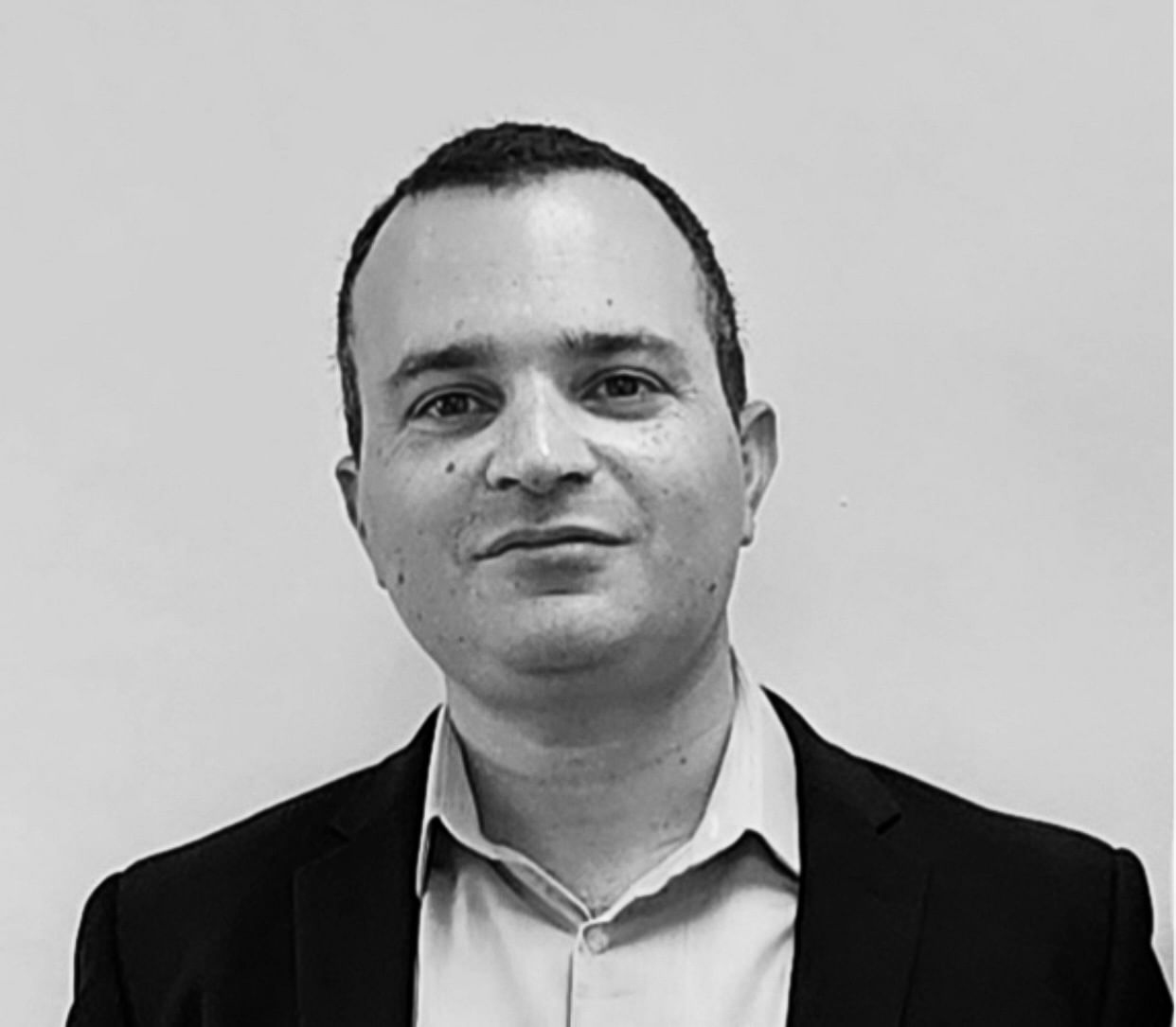
Written by Ofer Tirosh
Connect on LinkedInOfer founded Tomedes in 2007 and now leads the company's push to combine two decades of human translation expertise with AI. He writes about where the language industry is actually heading and the shifts nobody's ready for, the bets that paid off, and the ones that didn't.
Share:

Post your Comment