 Add text to get the translation that 22 AI models agree on


Tomedes restructures client team for end-to-end ownership
A translation project moves from intake to a project manager, then to a linguist team, then to quality assurance, then back to a different account contact for delivery and follow-up. At some point in that chain, a client ends up repeating context that should already be on file: why a specific term was flagged last time, why a market required a different tone, what went wrong on a previous file and how it got fixed. None of that is anyone's fault exactly. It is simply what happens when a project moves through separate departments, each of which only sees its own piece of the work.
Tomedes recently restructured its client-facing team specifically to close that gap. Rather than a project moving between departments as it advances, one team stays accountable to it from initial contact through final delivery.
Where the handoff model actually breaks down
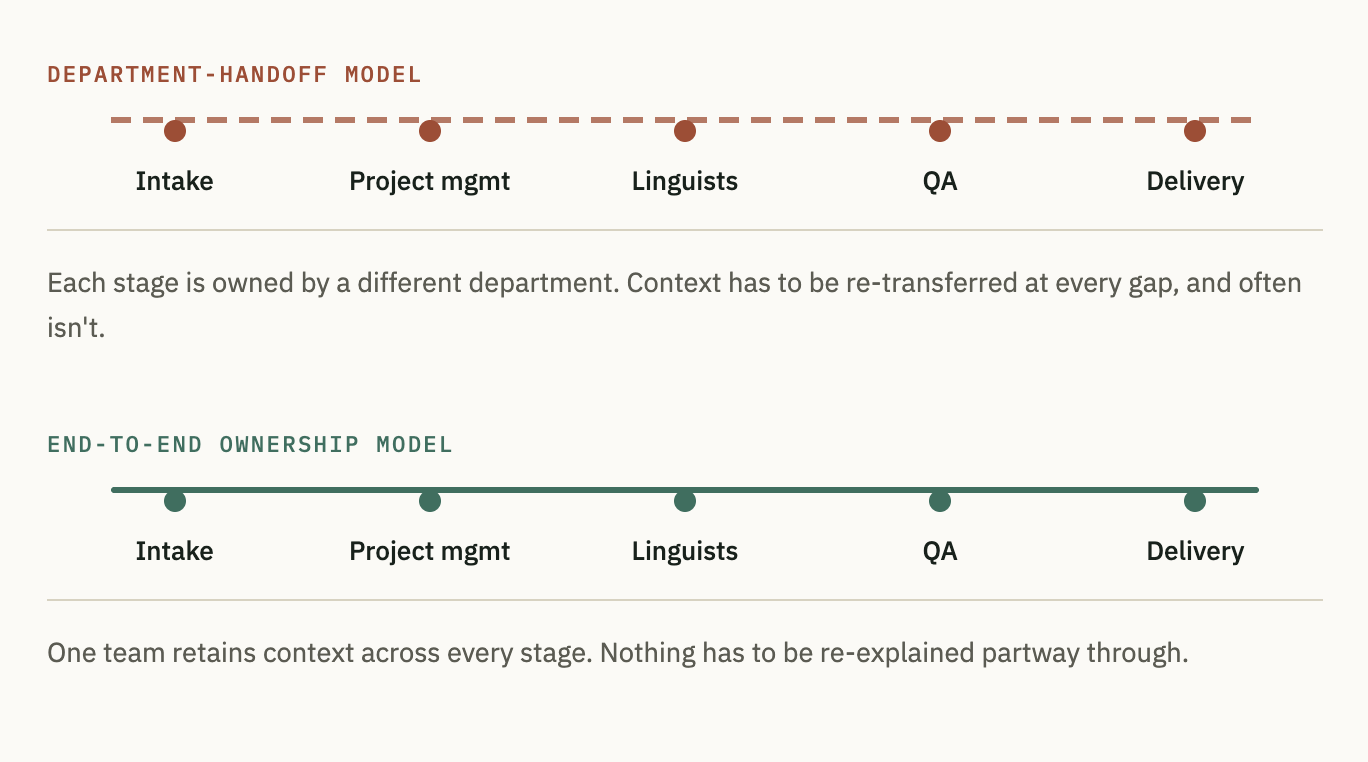
This tends to show up in a few predictable places on a multi-stage localization project. A recurring client's fifth order gets treated like a first order because the person handling it now wasn't on the first four. A formatting requirement agreed on months earlier gets missed because it lived in one department's notes and never reached the next. A rush request stalls because the person who understands the urgency isn't the person with the authority to reprioritize it.
None of these are quality failures in the usual sense. The translation itself might be accurate. What breaks is continuity, and continuity is exactly what a business relying on ongoing, recurring, or multi-market translation work actually needs.
What changed inside Tomedes
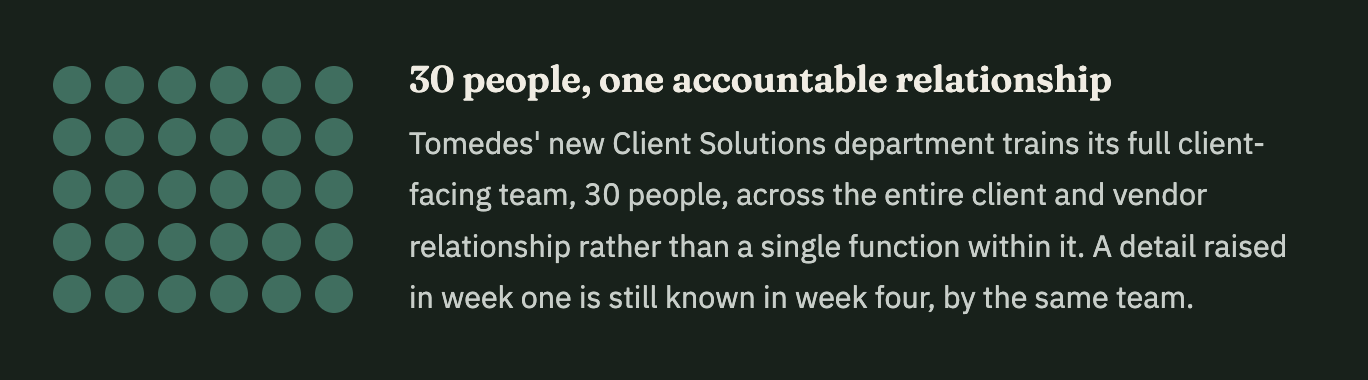
Emilyn Sinamban leads the new department after building Tomedes' customer success function over the past decade. She has described the priority behind the change in terms of preparedness rather than process for its own sake:
Why this matters more on ongoing work than a single project
A short, one-time translation rarely tests this kind of structure, since there is little continuity to lose in the first place. The gap shows up on the kind of work most B2B buyers actually have: recurring monthly content, multi-market localization campaigns, or long-running legal and technical documentation spanning several rounds of revision. On projects like these, a vendor that retains context is functionally a different product than one that resets with every handoff, even when both are technically capable of producing an accurate translation.
This is one reason Tomedes' approach to ongoing business translation and ongoing localization work leans on the same team staying involved project over project, rather than a rotating set of contacts per job.
What to ask any translation vendor before you commit
1. Does the same person or team who takes the initial brief remain accountable through delivery, or does the project move through separate departments along the way?
2. If a detail matters on order one, how is that carried forward to order five, ten, or fifty?
3. Who has the authority to act on an urgent request, and are they the same person who understands why it's urgent?
Written by Denis Carvalho
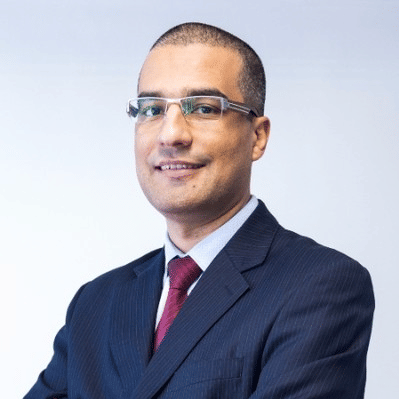
Connect on LinkedInDenis manages client solutions for Tomedes' global accounts, where his job is simple to describe and hard to do: tell clients the truth early, then make sure the truth holds. He writes about what actually happens on a real translation project such as the timelines, the surprises, and the work that keeps a promise on schedule.
Share:

Post your Comment