 Add text to get the translation that 22 AI models agree on


Top interpretation companies in the USA: 2026 guide
The U.S. interpretation services market is large, fast-growing, and in the middle of significant consolidation. Estimates of the market's exact size vary considerably by research firm: figures for 2024 range from roughly $2.9 billion to over $60 billion depending on scope and methodology, but every source agrees on the direction, which is sustained growth driven by healthcare, legal, and government demand where accuracy isn't optional. At the global level, the interpreting sector makes up approximately 16% of the entire language services market, estimated at $11.7 billion in 2024 and projected to grow to $17.1 billion by 2029, an 8% CAGR that surpasses the growth rate of the broader language services industry.
Demand is driven by healthcare, legal, and government sectors, where accuracy is not optional. Millions of U.S. residents speak English "less than very well." The federal government's own Limited English Proficiency resource tracks this population and the agencies required to serve it, creating sustained, legally backed demand for interpretation access across public and private institutions. At the same time, the industry is navigating a significant policy shift: on March 1, 2025, President Trump signed Executive Order 14224 designating English as the official language of the United States and revoking the 25-year-old Executive Order 13166, which had required federal agencies to provide meaningful language access for people with limited English proficiency. The executive order does not change existing statutes such as Title VI of the Civil Rights Act or Section 1557 of the Affordable Care Act (which continue to mandate interpretation in healthcare and federally funded settings), but it creates uncertainty for providers relying on federal government contracts.
Industry consolidation has also accelerated sharply. The interpreting industry experienced a notable wave of mergers and acquisitions from 2023 to 2025, driven by efforts to expand service portfolios, geographic reach, and AI capabilities. Several providers that operated independently in 2024 have since merged or been acquired, a reality this guide reflects.
How to compare interpretation companies: OPI, VRI, and on-site options
Before reviewing individual companies, the most important decision is matching service type to use case:
Over-the-phone interpreting (OPI): Best for routine, time-sensitive conversations where visual cues are not critical. Widely used in healthcare triage, call centers, insurance claims, and social services.
Video remote interpreting (VRI): Preferred for appointments where visual communication matters, such as medical consultations, legal depositions, mental health sessions, and educational settings. Tomedes delivers this mode through video remote interpreting, built for exactly these scenarios. VRI and OPI continue to expand, driven by improved platforms, better video quality, and demand for flexible and scalable language support.
On-site interpreting: Required for complex legal proceedings, conferences, and high-stakes medical encounters. Tomedes' on-site interpreting service covers this category directly, with interpreters placed in the room for the encounters listed above. On-site interpreting has seen a resurgence in some public sectors even as remote modalities dominate overall volume.
Remote simultaneous interpreting (RSI): Used for multilingual conferences and events, replacing the traditional booth setup with web-based platforms. See Tomedes' conference interpreting service for how this is delivered at scale.
For a full breakdown of how to evaluate and hire an interpreter, see Tomedes' guide to hiring a qualified interpreter and the interpretation accuracy strategies resource.
The leading interpretation companies in the USA
1. LanguageLine Solutions
Website: languageline.com
LanguageLine is the world's largest interpretation provider by revenue and the dominant force in the U.S. market. According to the 2025 Nimdzi Interpreting Index, LanguageLine's interpretation revenues in 2024 were 38% higher than those of the next largest provider. The company handled more than 85 million interactions that year, a 42% increase from 2022. In early 2025, LanguageLine expanded its capabilities in accessible communication through the acquisition of ZP Better Together, a leading provider of language solutions for Deaf and Hard-of-Hearing communities in North America.
LanguageLine covers more than 240 languages via OPI and VRI, with particular strength in healthcare and government. Its scale and HIPAA-compliant infrastructure make it the default choice for large hospital systems and federal agencies.
Best for: Large healthcare systems, government agencies, and organizations requiring broad language coverage and rapid access.
Strengths: Dominant market position, 240+ languages, deep healthcare and government expertise, proprietary technology platform, sign language expansion via ZP Better Together acquisition.
Considerations: Less personalized service for smaller clients; premium pricing at enterprise scale; occasional wait times during peak demand periods.
2. Tomedes
Website: tomedes.com
Tomedes provides a comprehensive range of interpretation services, including simultaneous interpreting, consecutive interpreting, and conference interpreting, with coverage across 270+ languages. Every project is managed by a dedicated project manager, with 24/7/365 human support and no-bot service delivery. Tomedes holds ISO 17100:2015 for translation quality, ISO 18587:2017 for machine translation post-editing, and ISO 9001:2015 for quality management, certifications that matter in regulated industries where accountability is part of the procurement requirement.
The efficiency gains of AI-enhanced workflow tools don't come at the cost of nuance, cultural competence, or accuracy when they're paired with certified human linguists and subject-matter specialists. That's how Tomedes runs every interpreting engagement, unlike pure-technology OPI platforms. A mistranslated term in a legal interpreting engagement carries real legal consequence, and the same standard applies to on-site interpreting at multilingual conferences and NGO events. For scale, Tomedes has coordinated simultaneous interpretation across as many as 15 languages in a single recurring enterprise session: Czech, French, Portuguese, Bulgarian, Spanish, and Serbian among them in one client's monthly meeting.
Speed matters for anyone comparing providers under time pressure: Tomedes places an interpreter within 30 minutes of order confirmation on a typical assignment, and nearly all orders have an interpreter assigned same-day. Close to half of Tomedes' interpretation clients return for a second assignment within a year, and roughly one in four are placing orders at a high, ongoing cadence, well above what's typical for one-off language services. The 1-Year Quality Guarantee backs every project.
Best for: Organizations requiring conference interpreting, NGO and nonprofit work, legal and medical interpreting, and high-stakes multilingual environments where quality accountability is required.
Strengths: 270+ languages, ISO-certified quality workflow, dedicated project manager on every project, 24/7/365 human support, typical interpreter placement within 30 minutes, nearly 1 in 4 clients ordering at high ongoing cadence, 1-Year Quality Guarantee, proven capacity for complex multi-language simultaneous sessions, trusted by Google, Microsoft, and Amazon.
Considerations: Best suited for complex, high-value interpreting engagements rather than high-volume commodity OPI calls; onboarding for specialized projects may take additional time.
3. Propio Language Services (including CyraCom and United Language Group)
Website: propio.com
Propio is the most significant story in U.S. interpretation in the past 18 months. Nimdzi named Propio the fastest-growing language service provider of 2025, with 165.6% growth, and ranked it #10 on its global Top 100 list. This growth was driven by a series of major acquisitions: United Language Group (October 2024), Akorbi, ASL Services, and (most significantly) CyraCom International, acquired in July 2025 in a deal that combined two of the largest U.S.-based language service providers into a single organization with projected combined revenue of approximately $530 million.
Organizations that previously worked with CyraCom or United Language Group are now operating under the Propio umbrella. The combined entity serves approximately 12,000 clients through a network of 20,000 linguists covering more than 300 languages. Propio's technology stack includes the Propio ONE app for on-demand interpreting, Propio Workforce OS for healthcare resource coordination, and AI-assisted translation tools.
Best for: Healthcare organizations requiring large-scale OPI and VRI; organizations that previously worked with CyraCom and are navigating the transition; enterprises requiring a single provider for interpretation, translation, and localization.
Strengths: Now one of the largest interpretation providers in the U.S. by revenue; strong healthcare and government specialization; combined Propio and CyraCom infrastructure; ASL services included; 300+ languages.
Considerations: Active integration of multiple acquired companies. Clients should verify service continuity and account contacts, particularly those transitioning from CyraCom or ULG platforms; rapid consolidation may create short-term operational complexity.
4. Certified Languages International (CLI)
Website: certifiedlanguages.com
CLI provides OPI and VRI in more than 230 languages across healthcare, legal, financial, and education sectors. Its 24/7 availability and industry-specific interpreter networks have made it a reliable partner for healthcare providers and call centers requiring consistent, high-accuracy language access.
Best for: Healthcare providers, call centers, financial services, and education requiring 24/7 multilingual support.
Strengths: 230+ languages, 24/7 availability, strong accuracy and cultural competence standards, tailored resources for healthcare and call center environments.
Considerations: Less emphasis on on-site interpreting; no dedicated client portal for self-service request management.
5. Interpreters Unlimited
Website: interpreters.com
Interpreters Unlimited covers more than 200 languages with OPI, VRI, and on-site options across education, legal, healthcare, government, and corporate sectors. The company's scheduling platform and broad industry coverage make it a versatile option for organizations with varied interpreting needs.
Best for: Organizations across multiple industries requiring flexible scheduling and a broad language network.
Strengths: Multi-industry expertise, 200+ languages, customized solutions, dedicated account management.
Considerations: Technology focus is primarily on scheduling and workflow management rather than AI-enhanced interpreting tools.
6. AMN Language Services
Website: amnhealthcare.com
AMN Language Services is the healthcare-focused arm of AMN Healthcare, one of the largest healthcare workforce solutions providers in the U.S. It provides HIPAA-compliant OPI and VRI for hospitals and clinics, with competitive pricing and a user-friendly platform designed for clinical workflows.
Best for: Healthcare providers requiring affordable, compliant interpretation integrated with existing clinical systems.
Strengths: HIPAA-compliant platform, competitive pricing, easy integration with clinical workflows, AMN Healthcare infrastructure.
Considerations: Primarily healthcare-focused; limited breadth for organizations outside clinical settings.
7. MasterWord Services
Website: masterword.com
MasterWord provides on-site, OPI, and VRI services across healthcare, government, education, and corporate sectors, with extensive interpreter training programs and a focus on cultural accuracy. The company is notable for being woman-led (founded and run by Ludmila Golovine) and is recognized in the Nimdzi 100.
Best for: Organizations requiring specialized interpreting in healthcare, government, and education with an emphasis on interpreter quality and training.
Strengths: Rigorous interpreter training, cultural and linguistic accuracy, strong healthcare and government sector experience, Nimdzi-ranked.
Considerations: Fewer language options than the largest providers; higher costs for urgent or expedited services.
8. GLOBO
Website: helloglobo.com
GLOBO specializes in on-demand interpreting with fast connect times and a technology-driven platform targeting healthcare organizations. Its OPI and VRI services are built around speed and ease of access, making it a practical choice for clinical settings where interpreters are needed at short notice.
Best for: On-demand healthcare interpreting where fast connection times are a priority.
Strengths: Fast response times, user-friendly platform, healthcare specialization.
Considerations: Narrower focus outside healthcare; fewer language options than larger multi-industry providers.
9. ALTA Language Services
Website: altalang.com
ALTA offers OPI and VRI across legal, business, government, education, and healthcare sectors, with a particular reputation for language assessment services and interpreter quality standards. Its testing and certification capabilities make it a useful partner for organizations that also need to evaluate bilingual staff.
Best for: Organizations in legal, education, and government sectors requiring culturally accurate interpretation alongside language assessment services.
Strengths: High accuracy standards, strong legal and business reputation, language assessment and testing expertise.
Considerations: Higher pricing; limited regional availability in some markets.
10. American Language Services (ALS)
Website: alsglobal.net
ALS provides on-site, OPI, and VRI across legal, business, and government sectors, with a long track record and competitive pricing across a broad range of language pairs.
Best for: Legal, government, and business clients seeking experienced interpreters at competitive rates.
Strengths: Extensive legal and government experience, competitive pricing, broad language coverage.
Considerations: Limited healthcare specialization; technology integration lags behind more platform-first competitors.
11. Language Services Associates (LSA)
Website: lsa.inc
LSA focuses on long-term client relationships and customizable solutions, offering OPI, VRI, and on-site interpretation across multiple industries. Its customer-centric model makes it a practical choice for organizations seeking a single ongoing provider rather than on-demand spot access.
Best for: Organizations seeking a long-term interpretation partner with customizable, relationship-driven service.
Strengths: Relationship-focused model, competitive pricing, experienced multi-industry interpreters.
Considerations: Less suited for organizations needing flexible, one-time interpretation; technology integration is less advanced than platform-first competitors.
12. TransPerfect
Website: transperfect.com
TransPerfect is one of the largest language service providers in the world, offering interpretation across more than 170 languages alongside a comprehensive translation and localization portfolio. Its interpretation services are particularly strong in legal, technology, and corporate sectors, supported by AI-enhanced tools and a global interpreter network.
Best for: Multinational organizations requiring interpretation as part of a broader language services program covering translation, localization, and legal linguistic services.
Strengths: Global scale, 170+ languages, strong legal and corporate expertise, AI-enhanced platform, comprehensive language services integration.
Considerations: Premium pricing; interpretation may not be the primary service specialization relative to larger pure-play interpretation providers.
13. Propio Language Services (ASL Services division)
Website: propio.com/asl-services
Following Propio's acquisition of ASL Services, Inc. in October 2024, the combined entity now offers one of the broadest American Sign Language (ASL) interpretation networks in the U.S. This complements LanguageLine's ZP Better Together acquisition, reflecting growing industry recognition of the Deaf and Hard-of-Hearing community's interpretation needs.
Best for: Organizations requiring on-site or remote ASL interpretation for Deaf or Hard-of-Hearing clients, patients, or employees.
Strengths: Dedicated ASL network, on-site and video options, backed by Propio's broader language infrastructure.
Considerations: As a recent acquisition, service integration with Propio's broader platform is still in progress.
Key trends shaping the industry in 2025–2026
M&A consolidation is reshaping the competitive landscape
The interpreting industry experienced a notable wave of mergers and acquisitions from 2023 to 2025. Propio's acquisition of CyraCom alone created an entity with projected combined revenue of approximately $530 million. This consolidation trend is driven by efforts to expand service portfolios, geographic reach, and technological capabilities in response to geopolitical shifts and AI advancements, and is expected to continue. Organizations evaluating providers should verify current ownership and integration status before committing to long-term contracts.
Federal language access policy uncertainty
The signing of Executive Order 14224 in March 2025 removed the federal government's longstanding language access mandate. The EO and accompanying DOJ guidance apply only to federal government agencies and do not change existing language access requirements under laws like Title VI of the Civil Rights Act or Section 1557 of the ACA. Healthcare providers, educational institutions, and legal services organizations receiving federal funding remain legally required to provide interpretation. However, providers that built significant revenue from federal government direct contracts are navigating genuine uncertainty about future contract volume.
AI's current role in interpretation: Scheduling and quality support
AI-backed machine interpreting is currently considered in its nascent stage and is mostly suitable for low-stakes scenarios due to limitations in accuracy, nuance, cultural context, and growing concerns about reputational risk, privacy, and bias. Highly regulated sectors like healthcare and legal are reluctant to adopt machine interpreting due to accuracy, reliability concerns, and compliance issues including HIPAA. AI's near-term role in interpretation is scheduling optimization, workflow automation, and quality assurance support. Certified human interpreters remain the standard for high-stakes encounters.
Remote interpreting is a growing share of delivery, though figures vary by source
On-site interpretation dominated the market before the pandemic. Since then, remote delivery modes (VRI and OPI) have captured a substantial and growing share of total interpretation volume, though published estimates of the exact on-site/remote split vary significantly by research firm and aren't consistent enough to cite a single precise figure with confidence. For medical interpreting specifically, the shift toward remote delivery has been reinforced by telehealth adoption and the integration of VRI directly into electronic health record (EHR) systems.
FAQs
1. What is the largest interpretation company in the USA?
LanguageLine Solutions is the largest interpretation provider in the U.S. and globally by interpretation-specific revenue. According to the 2025 Nimdzi Interpreting Index, LanguageLine's interpretation revenues were 38% higher than those of the next largest provider, and the company handled more than 85 million interactions in 2024.
2. Has CyraCom been acquired?
Yes. Propio Language Services acquired CyraCom International in July 2025, combining two of the largest U.S.-based interpretation providers. Organizations that previously worked with CyraCom are now served by Propio. The combined entity serves approximately 12,000 clients across 300+ languages.
3. What laws require interpretation services in the USA?
In healthcare, Section 1557 of the Affordable Care Act requires interpretation for patients with limited English proficiency. Title VI of the Civil Rights Act prohibits national origin discrimination in federally funded programs, which courts have consistently interpreted to require language access. These laws remain in force regardless of Executive Order 14224, which affected federal agency-level guidance but did not repeal the underlying statutes.
4. What is the difference between OPI and VRI?
Over-the-phone interpreting (OPI) connects an interpreter via telephone, fast and cost-effective for routine conversations. Video remote interpreting (VRI) connects via video, allowing the interpreter to see both parties, which matters for encounters where facial expression, body language, or visual communication aids are relevant. For a deeper comparison, see Tomedes' guide to medical interpreting.
5. What should organizations look for when choosing an interpretation company?
Key factors include: language coverage, mode availability (OPI, VRI, on-site), sector specialization (healthcare, legal, government), interpreter certification standards, technology platform and integration capabilities, compliance credentials (HIPAA, ISO certifications), pricing structure, and responsiveness. For detailed guidance, see the Tomedes interpretation checklist.
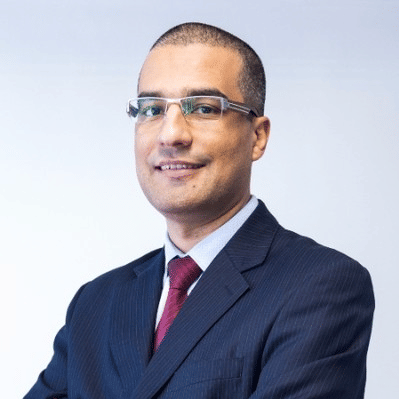
Written by Denis Carvalho
Connect on LinkedInDenis manages client solutions for Tomedes' global accounts, where his job is simple to describe and hard to do: tell clients the truth early, then make sure the truth holds. He writes about what actually happens on a real translation project such as the timelines, the surprises, and the work that keeps a promise on schedule.
Share:

Post your Comment