 Add text to get the translation that 22 AI models agree on


How Tomedes coordinated on-site Japanese interpreters and equipment for a multi-session meeting
An on-site interpretation job can go wrong before anyone speaks. The interpreters can be late, or the equipment crew can arrive to a room that is not ready. Those failures show up first, and the interpretation itself is judged only after them.
I am the Global Client Solutions Manager at Tomedes. I believe a customer notices punctuality and setup before anything else, because both come before the interpretation can be judged. This article walks through one on-site English and Japanese assignment for a company, using the order record and a public review.
The company is not named. The review sits on Tomedes’ Trustpilot page and was posted in July 2026, and I quote only a few words from it.
Key takeaways
- The order covered on-site English and Japanese interpretation, in both directions, for a company meeting that ran in more than one session.
- Interpreter CVs went to the customer for approval, and more than one interpreter was involved.
- A separate equipment vendor was confirmed, and its quote covered installation, operation, and dismantling of the equipment, plus travel for its technical staff.
- The equipment was scheduled for installation the day before the meeting, and the customer was to place the meeting tables in advance and supplied a room layout.
- A public Trustpilot review from July 2026 describes interpreters who arrived on time and were very helpful.
What did the customer need for the on-site meeting?
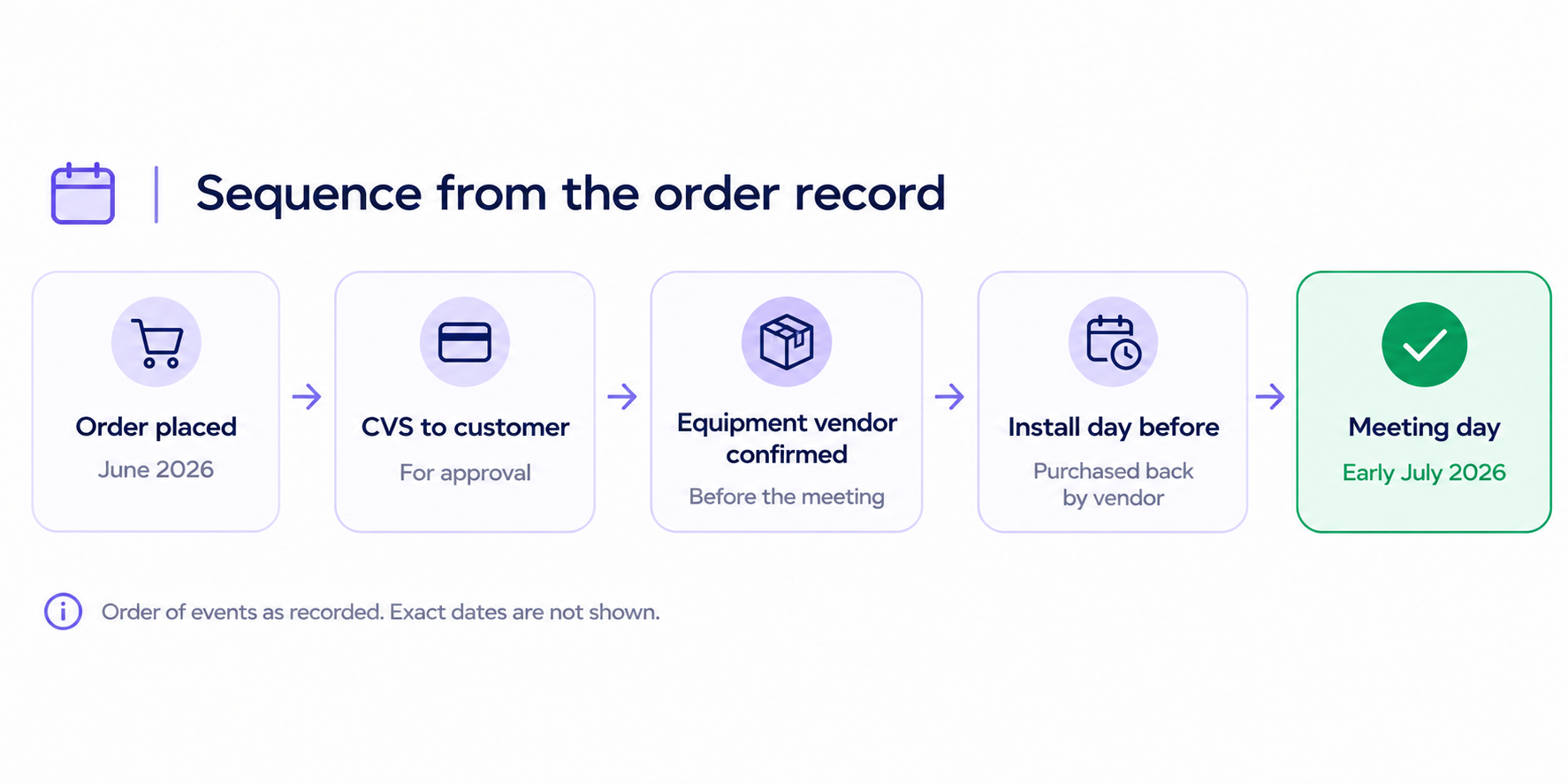
A company needed English and Japanese interpretation, in both directions, on site for a meeting that ran in more than one session during the day. The order was placed in June 2026, the meeting was scheduled for early July 2026, and the order was delivered.
In my view, a meeting with several sessions asks more of the interpreters and of the room setup than a single short appointment does.
What the order record shows and what is still to confirm
| Topic | What the order record shows |
|---|---|
| Format | English and Japanese in both directions, on site, with a meeting that ran in more than one session |
| Interpreters | CVs sent to the customer for approval, with more than one interpreter involved |
| Equipment | A separate vendor confirmed, with a quote covering installation, operation, dismantling, and its staff’s travel |
| Room setup | Tables to be placed in advance, a room layout supplied, and installation scheduled the day before the meeting |
| Travel | A transportation line on the order, and interpreter train fees handled as a reimbursed expense |
| Outcome | Order delivered, and no notes or incidents recorded |
How were the interpreters chosen?
Interpreter CVs were sent to the customer for approval, and more than one interpreter was involved in the assignment. The order record shows the CVs were awaiting the customer’s approval at one stage, which makes approval a real step in the process.
In my opinion, letting the customer see the CVs first is the simplest way to build trust before the day, because the customer has chosen the people who will be in the room. Our guide to hiring a qualified interpreter covers the general checks.
What equipment and room setup did the order include?
A separate equipment vendor was confirmed for the meeting, and its quote covered installation, operation, and dismantling of the equipment, plus travel for its technical staff. The plan was to install the equipment the day before the meeting and leave it idle until the sessions began.
The customer was to place the meeting tables ahead of the installation and shared a room layout. On the installation day, the plan was to hand the room back by early afternoon, with the equipment in use throughout the meeting day.
In my opinion, a day-before installation is the best protection against a late start, because problems surface while there is still time to fix them. For background on how the modes differ, see our guide to simultaneous interpretation, and for the service itself, our on-site interpretation page.
How were travel and logistics handled?
Transportation was a separate line on the order, and the interpreters’ train travel was handled as a reimbursed expense. The order also set a clear schedule, with installation the day before and then the meeting day running from morning to late afternoon as planned.
The order does not say where the interpreters were based, so this article does not describe them as local. In my view, agreeing how travel is billed at booking avoids surprises later.
As of November 2026, Tomedes delivers interpretation on site and online, and this assignment was on site.
What did a customer say about the interpreters?
A public Trustpilot review posted in July 2026, marked as an unprompted review, said the interpretation was expertly provided and precise and that the interpreters arrived on time and were very helpful. The review is short and does not mention the venue, the languages, or the equipment.
The reviewer wrote that the interpreters “arrived on time and were very helpful.” I read the comment about punctuality as a point about the whole job, since several parties had to be in place for it to hold.
What should I settle before booking on-site interpreters for a multi-session meeting?
Settle the interpreting mode, the number of interpreters, the equipment and who supplies it, the room setup date, and the travel arrangements before the booking is final. In my view, ask to see the interpreter CVs and agree an installation day before the meeting.
These are the six questions I would work through with a customer before an on-site meeting.
- Which interpreting mode does the meeting need, and does it need equipment?
- How many interpreters will the schedule require, and can I see their CVs before approving?
- Who supplies and operates the equipment, and when is it installed?
- When can the room be made available for setup, and who provides the layout?
- How are travel and other expenses handled?
- Who is my single point of contact on the day?
I think most of a project manager’s work on a job like this happens in the days before the meeting.
If you are planning an on-site meeting in more than one language, send the dates, the languages, and the venue through the quote form, and we will take it from there.
FAQs
Q: Does on-site interpretation always need equipment?
A: It depends on the mode, because simultaneous interpreting usually needs booths or headsets, while consecutive interpreting usually does not. On the order described here, a separate vendor handled the equipment, so confirm the mode with your project manager before you plan the room.
Q: Can I approve the interpreters before an on-site job?
A: Yes, because on this order the interpreter CVs were sent to the customer for approval before the assignment was final. Ask your project manager to share CVs early, and say what background you need, so the choice is made before the day.
Q: How far ahead should equipment be installed for an on-site meeting?
A: As early as the room is available, because problems are easier to fix before the meeting day. On this order the equipment was scheduled for installation the day before the meeting, and the customer was to place the tables in advance and supplied a room layout.

Written by Denis Carvalho
Connect on LinkedInDenis manages client solutions for Tomedes' global accounts, where his job is simple to describe and hard to do: tell clients the truth early, then make sure the truth holds. He writes about what actually happens on a real translation project such as the timelines, the surprises, and the work that keeps a promise on schedule.
Share:

Post your Comment