 Add text to get the translation that 22 AI models agree on


Top 10 Translation Tools for Translators Plus 3 Bonus Must-Haves
It’s easy to become set in a routine when it comes to your working life. However, regularly checking that you’re using the best translation tools is an important way of ensuring that your services remain competitive. Translation tools are advancing, meaning you can work faster and more efficiently when you use the right ones. Below, we’ll consider not only the best translation tools but also the best localization tools to ensure you’re at the top of your game.
Table of Content
Types of translation tools: How can each type help?
Computer assisted translation tools
5 Best free tools for translation and 3 bonus picks
6. MachineTranslation.com - bonus
7. Tomedes Pre-Translation Toolkit - bonus
8. Tomedes Translation Quality Assessment Tool - bonus
5 Best paid translation programs and platforms
Types of translation tools: How can each type help?
Broadly speaking, translation can be undertaken by humans, by computers – referred to as machine translation and artificial intelligence (AI) translation – and by a combination of both, known as post-editing machine translation.
This is not to say that translation undertaken by humans doesn’t take advantage of modern technology. Indeed, computer-assisted translation (CAT) tools are commonly used by professional translators who want to ensure that their work is as accurate, speedy and efficient as possible.
Computer assisted translation tools
For those who are new to CAT tools, their purpose is to reduce the time it takes to translate a document. They do this by organizing the text into smaller, translatable segments, which can be recalled later on during the translation process, thanks to the CAT tool’s translation memory.
We will look at some examples of these in a moment.
Machine translation tools
The best machine translation software options deliver passable translations in moments. They enable businesses to communicate in different languages in real time. They are free and available online, meaning that they can be used anywhere, any time.
While the quality of online translation tools isn’t quite up to that delivered by human translators, the business benefits mean that there is plenty of demand for them. Some companies are getting the best of both worlds by using a machine translation tool and then having a human edit the resulting copy. This can be faster and more cost-effective than traditional translation methods.
With that in mind, let’s look at some of the best tools for translators looking to perform at the top of their game.
5 Best free tools for translation and 3 bonus picks
Whether you translate websites, medical documents, or anything else, there is likely to be a free translation tool on the market to help you work better. Let’s take a look at some of the best.
1. Poedit
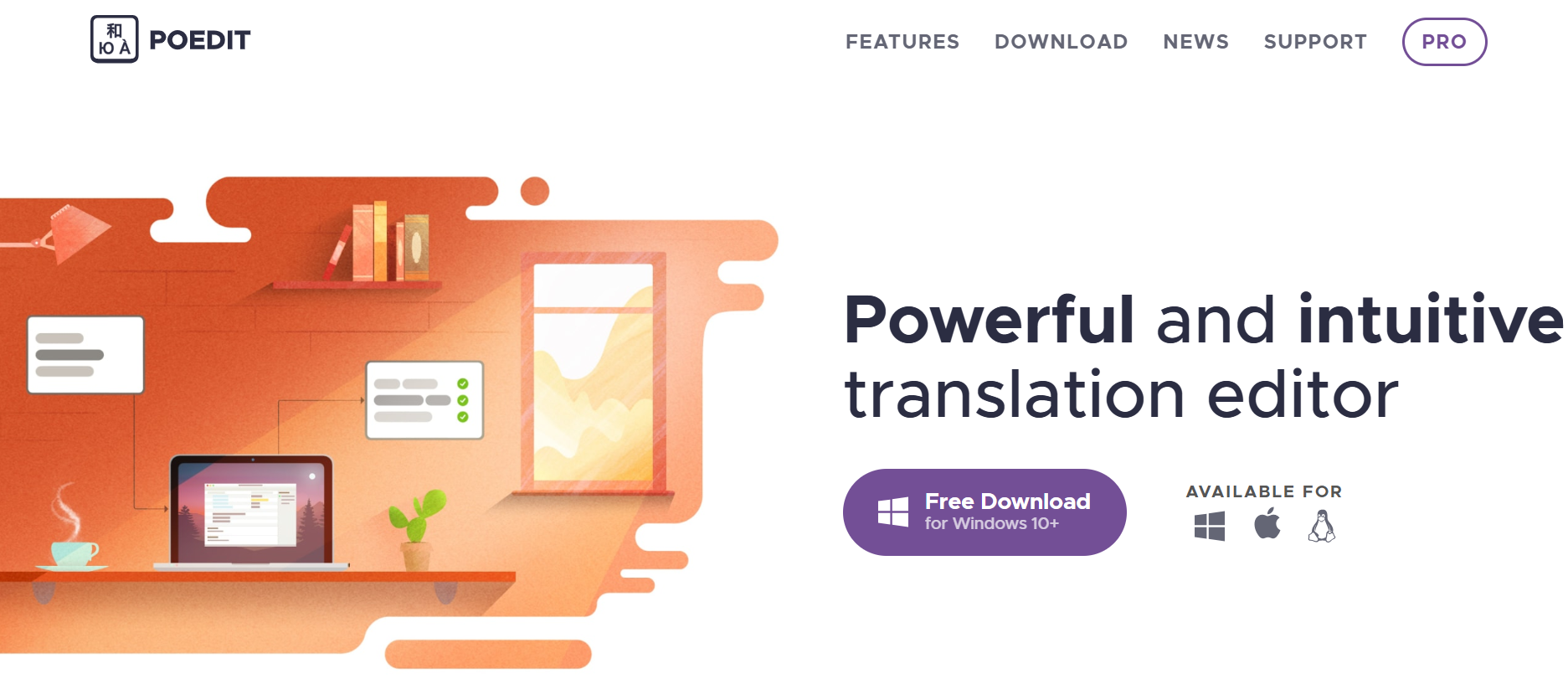 Do you translate apps and sites with gettext? If so, it’s time to take a look at Poedit. Billed as the fastest and most convenient means of handing translation using gettext (PO), this nifty solution provides a translations editor that is at once powerful and intuitive. The interface is easy to use and lightweight, with a host of smart features such as pre-translation.
The result? Less of your time wasted on mundane tasks and more time available to spend working on producing the best possible translations. Poedit even validates your translation files and checks your progress.
If you’re working with PHP projects (Drupal, WordPress), Python projects (Django) or pretty much anything running on Linux, why not give Poedit a try?
There is a free download available, as well as a paid pro offering. According to the Poedit website, more than 60,000 people already use this as one of their translators’ tools to save time each month.
2. Lokalise
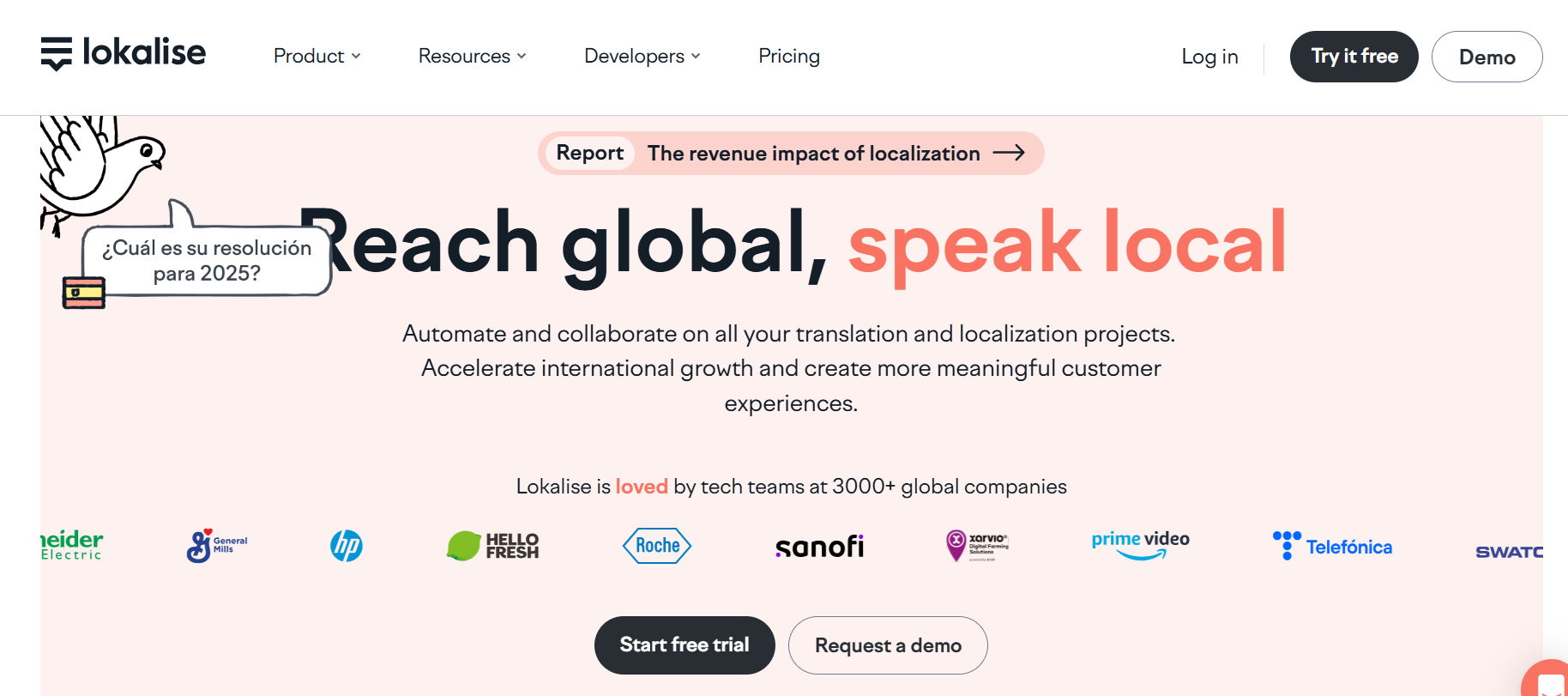
If you’ve got a big translation and localization project coming up, Lokalise can help you ensure it runs smoothly. This unique translation tool is ideal for agile teams looking to embrace automation and workflow transparency in order to deliver projects faster.
Lokalise enables you to translate with context and to see alternative translation variants. You can shorten your translations to achieve the perfect fit and rephrase things to meet your needs.
You can sign up to Lokalise for a 14-day free trial, which gives you access to all of its features. After that, you will automatically move onto the software’s free plan, with limited features. You can keep up to 500 keys (strings) on the free plan or switch over to a paid plan if you need more.
3. Smartcat
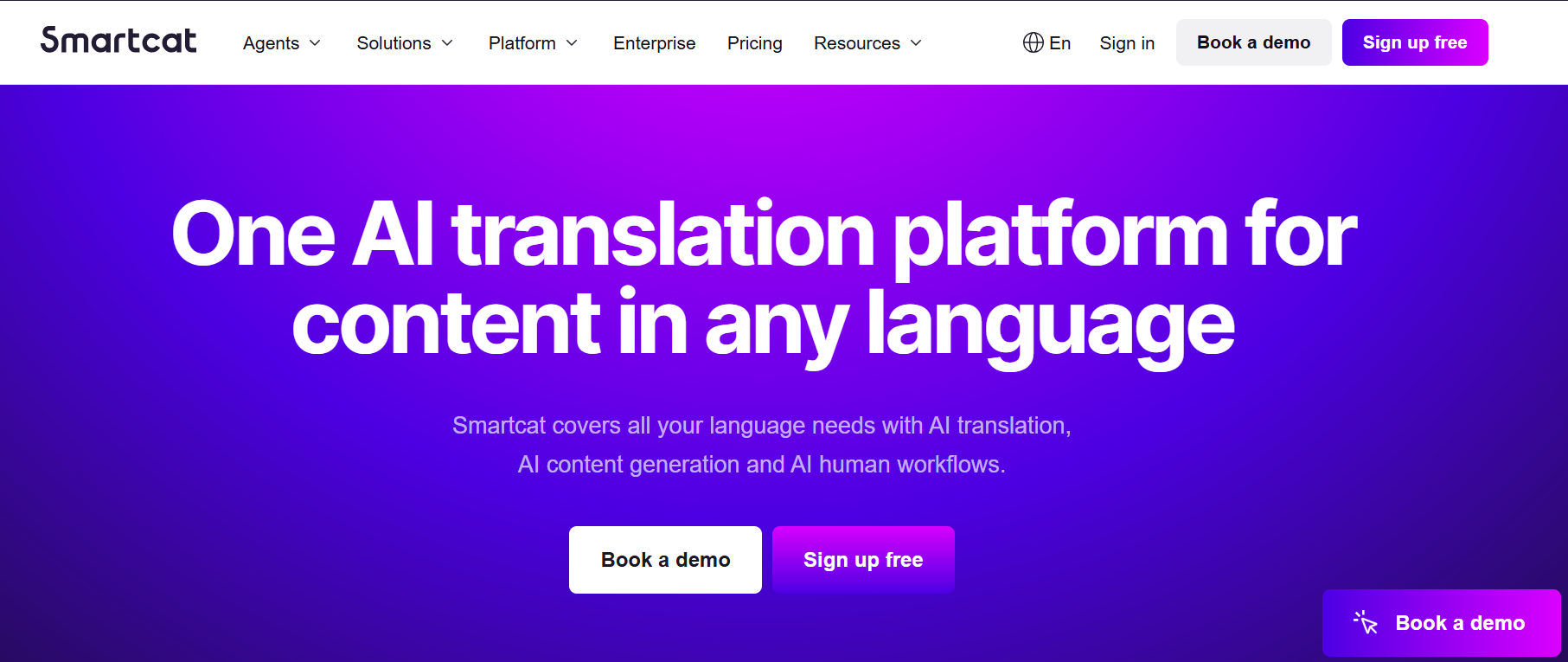
Free for freelance translators, Smartcat provides computer-aided translation software that can help you work faster and smarter. Its tools for translation success include real-time collaboration with translators and other contributors and the ability to create glossaries of terms in order to achieve consistent translations. The software supports multilingual translation memories too, which is a nice touch.
One of the major benefits of Smartcat is how easy it is to use for collaborative work. It’s great for solo translation projects, certainly, but it really shines when it comes to team working. Smarcat’s centralized, dynamically updated, and readily available translation assets are a major plus point when it comes to ensuring maximum productivity on such projects.
The free plan includes unlimited users, unlimited languages and unlimited projects, though projects expire after 45 days. It also includes 10,000 “Smartwords” per month, which Smartcat defines as, “words that save you time and money using Smartcat’s proprietary AI technology.”
4. The Free Dictionary

Finding the best translation tool is not all about fancy translation programs. The best free online translator tool could, in fact, simply be a reliable dictionary.
This is where The Free Dictionary by Farlex comes in. Not only does it feature a wide range of languages, it also provides a thesaurus, an encyclopedia, advice on English grammar, acronym and idiom sections, and medical, legal and financial dictionaries.
As if that weren’t enough, The Free Dictionary also provides a customizable homepage, meaning you can focus the site on the content you need the most.
5. OmegaT
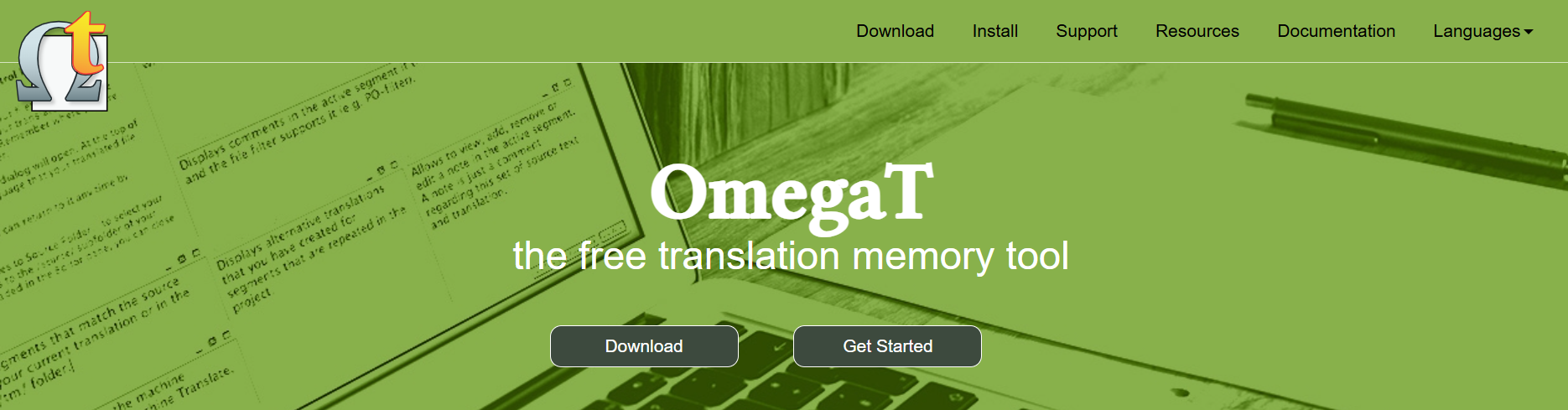
Our final contender for the best free translation tool is OmegaT. You can download OmegaT for free and use it with no restrictions, as it is an open-source translation memory tool. Just because it’s free doesn’t mean you miss out on anything. In fact, this translation memory application is packed with features, including Unicode (UTF-8) support, a built-in spell checker, and support for right-to-left languages.
OmegaT works with macOS and Linux, as well as Windows, and even interfaces with some online machine translation tools. Features include fuzzy matching, match propagation, glossaries that recognize inflected forms, simultaneous use of multiple translation memories, and more – all for over 30 file formats.
6. MachineTranslation.com - bonus
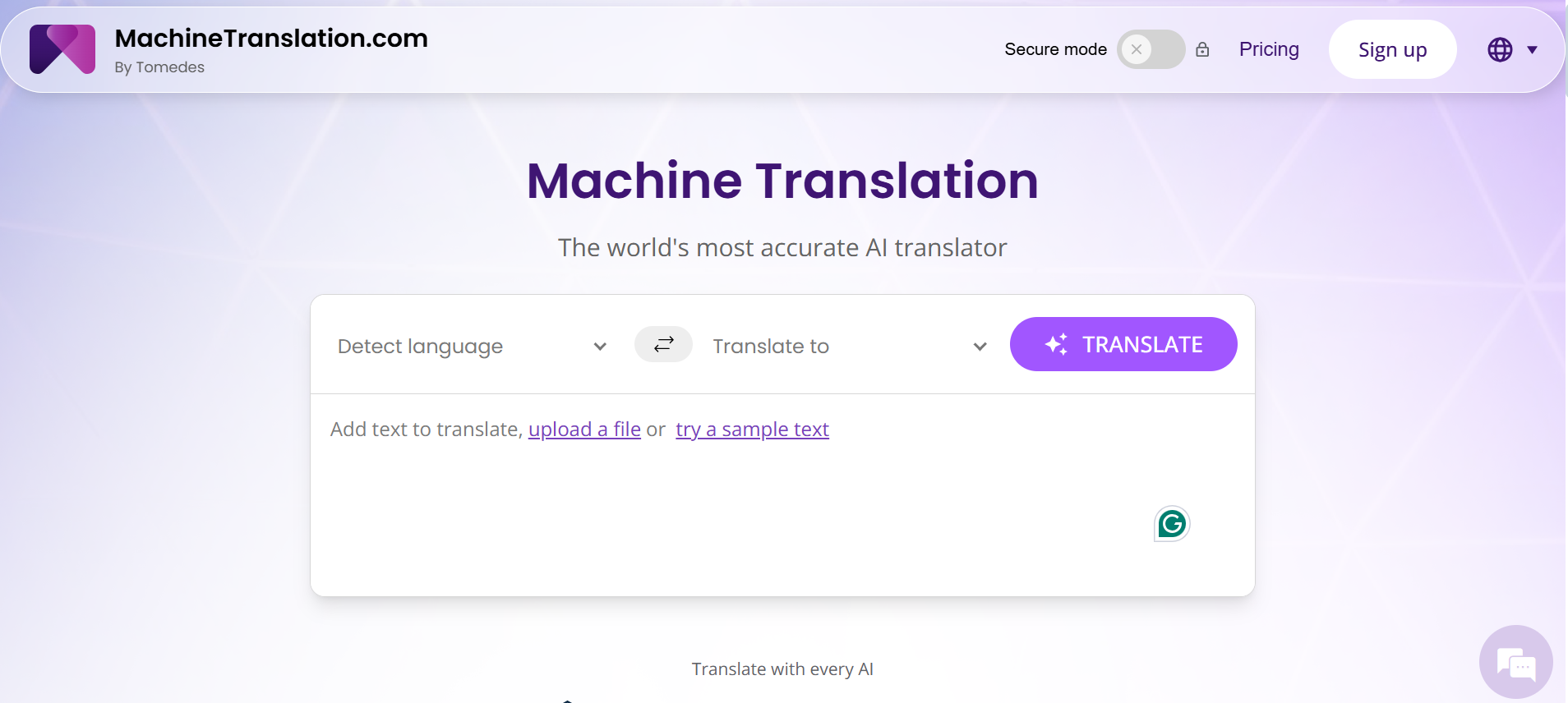
MachineTranslation.com, developed by Tomedes, offers high-quality AI-powered translations that rival professional human output. It aggregates top translation engines, providing side-by-side comparisons, quality scores, and contextual editing features. With its AI Translation Agent, users can customize tone, terminology, and preferences for more refined results.
This tool stands out by offering 100,000 free words monthly to registered users, with a one-time 100,000-word credit for guests. Businesses can slash translation costs by up to 90% while still achieving publish-ready accuracy. It’s fast, accessible, and ideal for teams needing scalable, cost-effective language solutions.
7. Tomedes Pre-Translation Toolkit - bonus
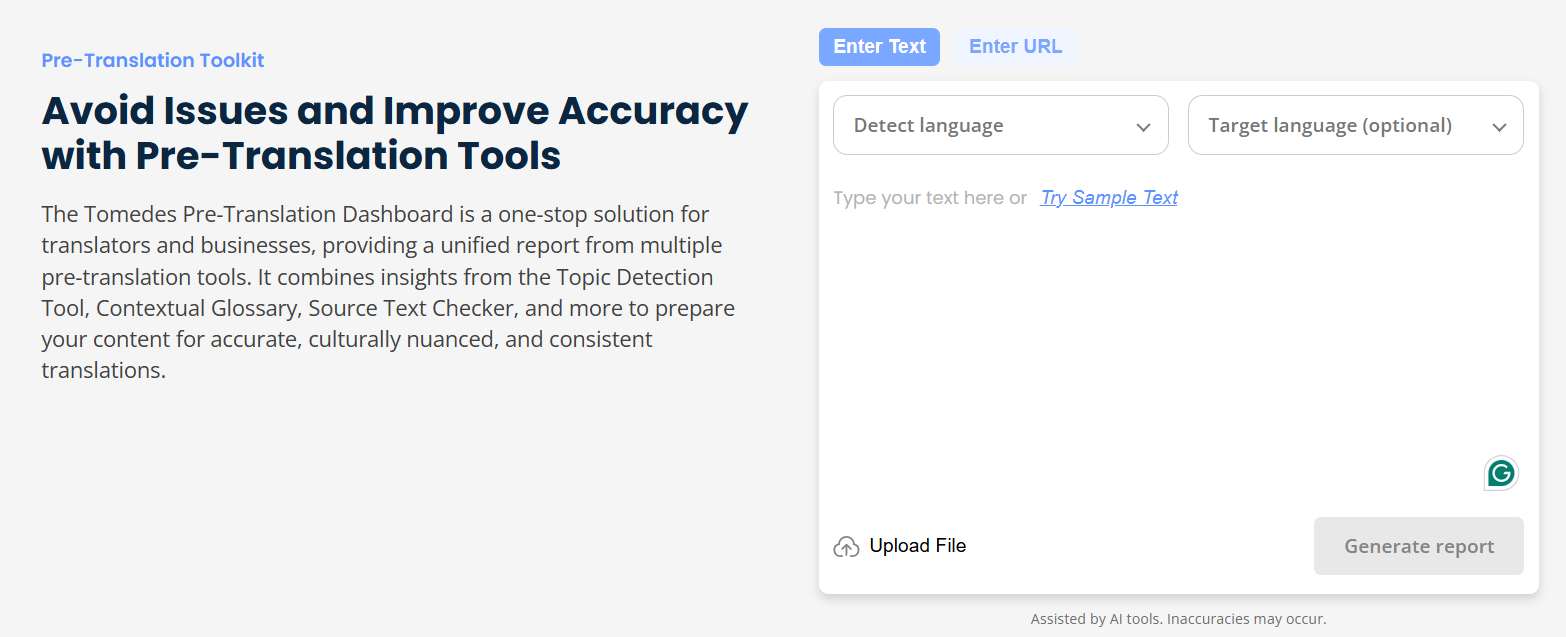
Tomedes’ Pre-Translation Toolkit helps users detect potential issues in source texts before translation begins, ensuring clarity and consistency from the start. It features AI tools like a language detector, topic identifier, glossary builder, and grammar checker—all rolled into one report. This toolkit prepares content for accurate translation by identifying key terms and assessing text complexity.
By catching problems early, it reduces rework and enhances overall translation quality. Users save time and avoid costly mistakes, making the process smoother for translators and clients alike. Whether you’re handling a legal brief or marketing copy, this tool ensures your text is translation-ready.
8. Tomedes Translation Quality Assessment Tool - bonus
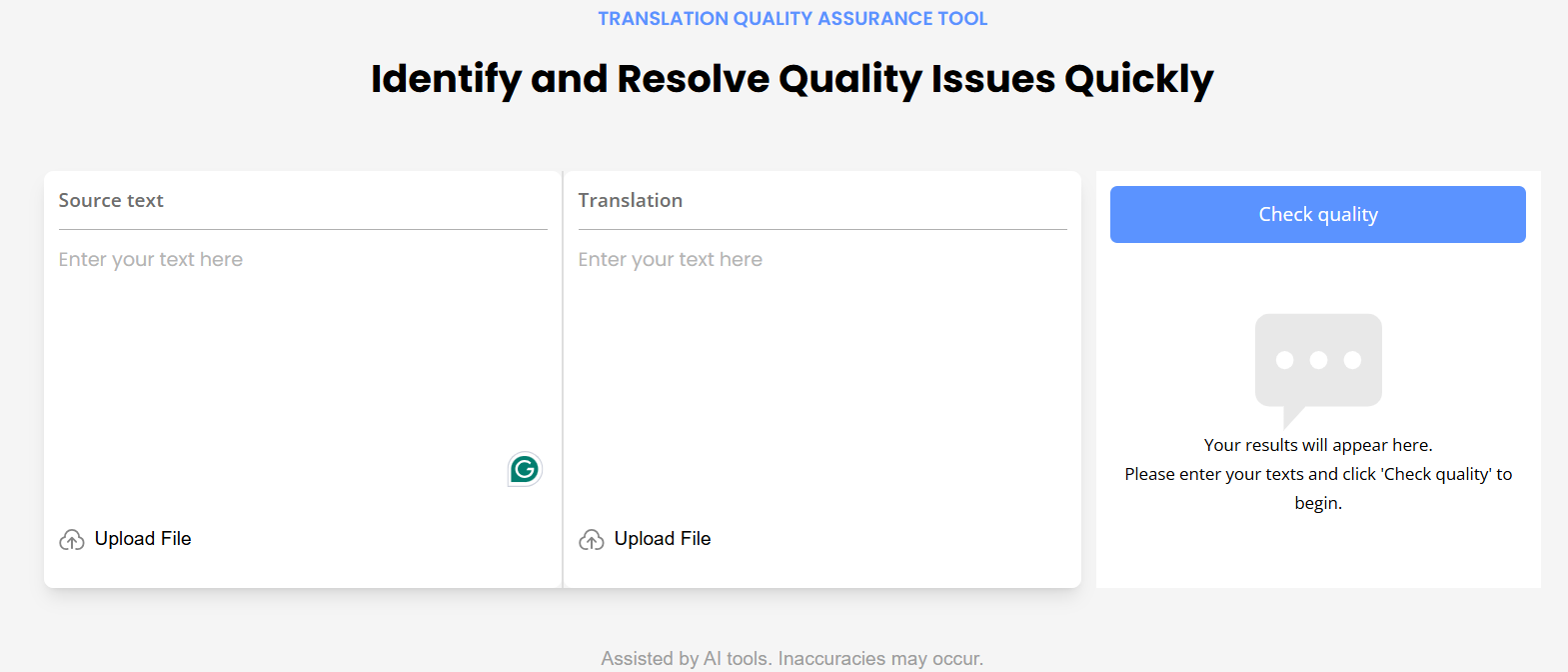
The Translation Quality Assessment Tool evaluates translated content against the source using advanced AI engines like ChatGPT, DeepSeek, and Gemini. It delivers clear quality scores for fluency, accuracy, terminology, style, and grammar—along with a bilingual glossary and consistency report. The tool also flags untranslated, incorrect, or incomplete segments for immediate correction.
Ideal for linguists, LSPs, and global teams, this tool streamlines QA and eliminates the guesswork of manual reviews. Users can run audits in minutes and share results instantly via a unique link. It’s completely free, requires no sign-up, and ensures translations meet professional standards every time.
5 Best paid translation programs and platforms
Before we dive into our list of popular translation tools that you need to pay for, it’s worth mentioning that you can try most of the translating programs we’ve included below for free for a limited period. Free trials are a great way to explore a product’s features and usability, so why not play around with a few different translation programs before committing to one?
6. memoQ
memoQ’s translator pro delivers a computer-assisted translation environment for individual translators. It runs on Microsoft Windows and promises to increase “productivity and quality for all those who perform, edit and review translations.”
This is quite a lofty goal but one that many of those who use memoQ would quickly confirm that it achieves. memoQ allows you to create a glossary with terms and reuse previous translations. You can also add reference materials and get suggestions from other resources while you type, as well as using its predictive text functionality.
This CAT tool has a great translation memory. It preserves context information in both language directions for super-accurate searching. Not only that, but memoQ is one of the easiest and most reliable translation tools that we’ve come across.
You can try memoQ for free for 30 days, which should give you plenty of time to form your own opinion on whether it deserves a spot in our list of top translation software.
7. SDL Trados
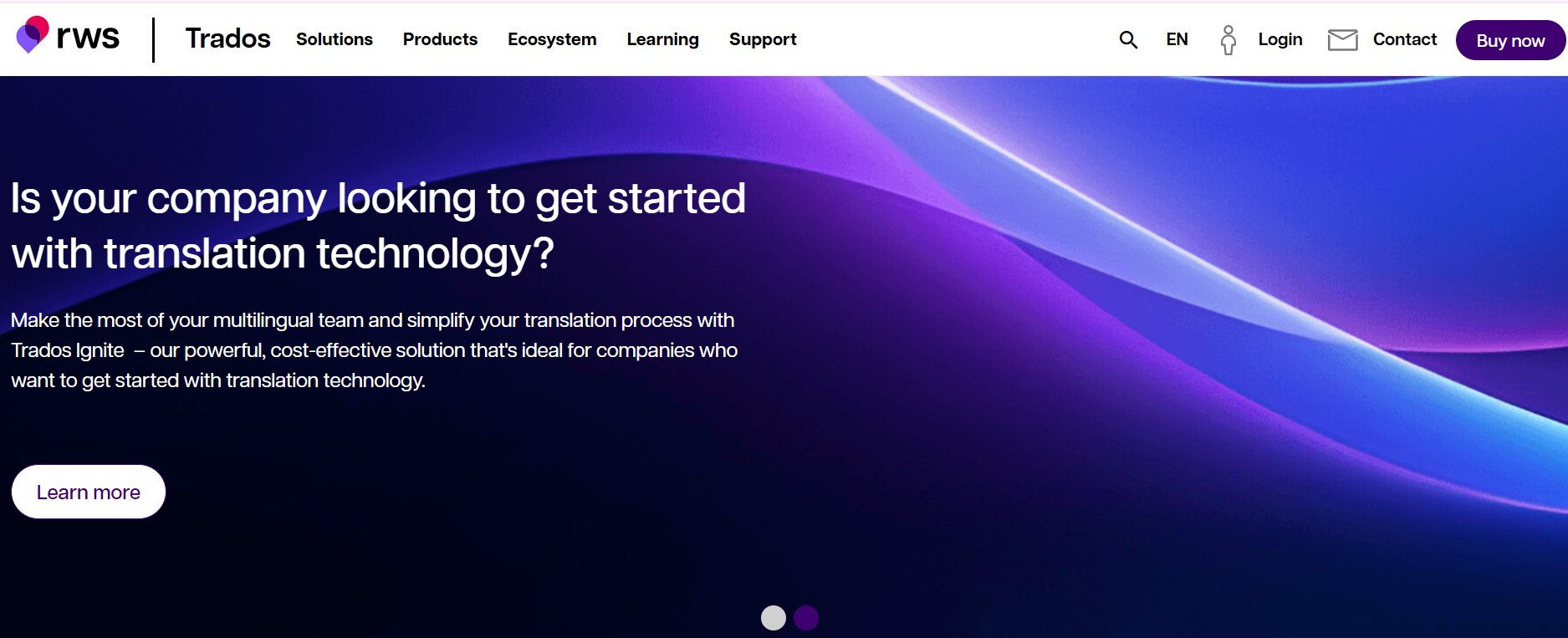
This industry stalwart is used by translators and localization experts around the world to help them translate faster and reduce admin while ensuring consistency in the quality of their work. More than 250,000 translation professionals use SDL Trados Studio to pick up the pace of their projects.
SDL Trados Studio pre-translates from a translation memory to allow translators to work at up to twice their usual speed. As with all CAT tools, how well-stocked the translation memory is will impact this speed, as will the relative similarities (or differences) between new translation materials and the translation memory.
This is another translation tool that offers a 30-day free trial, which affords you sufficient time to discover whether it’s the right choice for you. If not, there are plenty more tools for translation to choose from…
8. Transifex
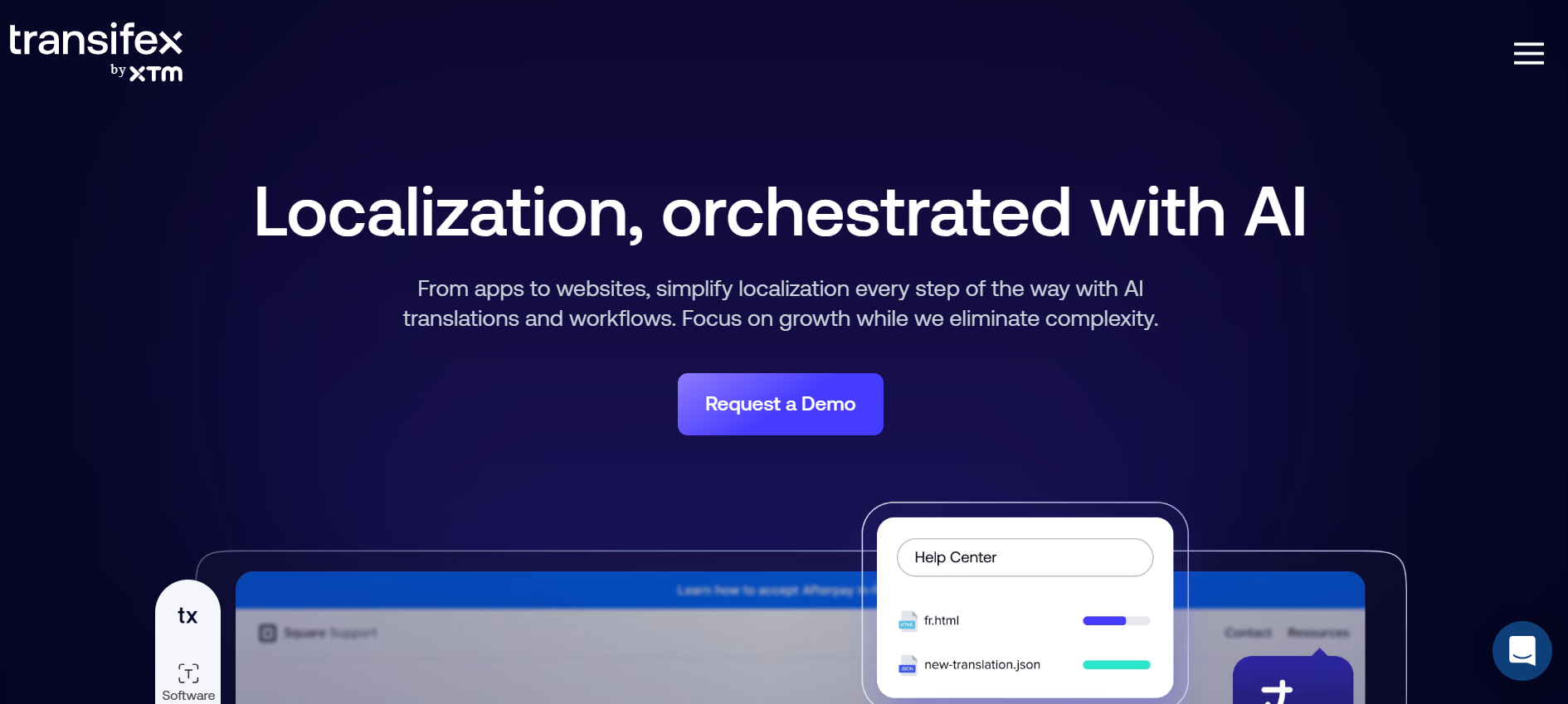
This is a localization platform with a truly global outlook. The cloud-based system provides access to a global content repository. Its beauty is its agility – everyone from product and localization managers to marketers and developers can benefit from using Transifex.
For localization managers, it provides the ability to manage localization in one place. For product managers, it allows the oversight of projects and collaboration with translators. Marketers can use it to build personalized multilingual experiences, while developers are able to automate the entire localization process.
This is a versatile platform that suits a wide range of uses. If you have a website, mobile app, desktop app, or subtitle job coming up, this might well be a tool worth checking out before you start.
Transifex is ideal for both web and mobile apps and already has over 500,000 users. You can try it for free for 15 days.
9. WPML
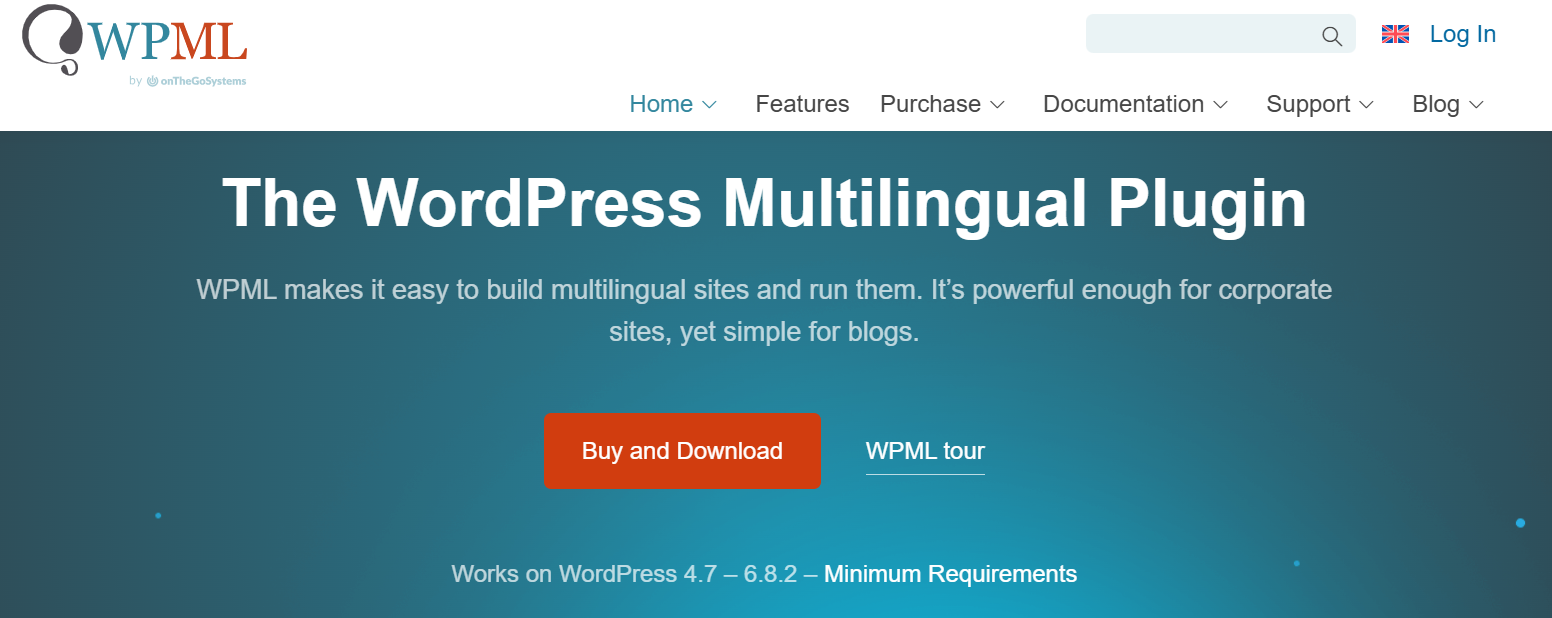
If you work on WordPress site translations regularly, it’s worth giving the WPML plug-in some attention. This powerful translation management tool allows you to work on the various elements of WordPress sites with ease, speeding up the translation process and providing some handy dashboard features that let you review the progress of the translation. The interface is clean and simple, making this an enjoyable tool to use when you translate a WordPress website.
Wes, Founder at Cude Web Design, attested to WPML’s reliability: We’ve relied on WPML across countless multilingual projects. Its compatibility with most themes and plugins makes it incredibly efficient, and the user-friendly interface helps our team stay productive during complex translation tasks.
One of the advantages of WPML is its compatibility. The tool plays nicely with every theme or plugin that uses WordPress API, giving you the ability to swiftly and efficiently translate posts, pages, customer types, menus, taxonomy, and more. There is extensive documentation on the WPML website to help you get the best out of it.
WPML offers a 30-day money-back guarantee on the cost of your WPML license if you stop using the tool.
10. Fluency Now
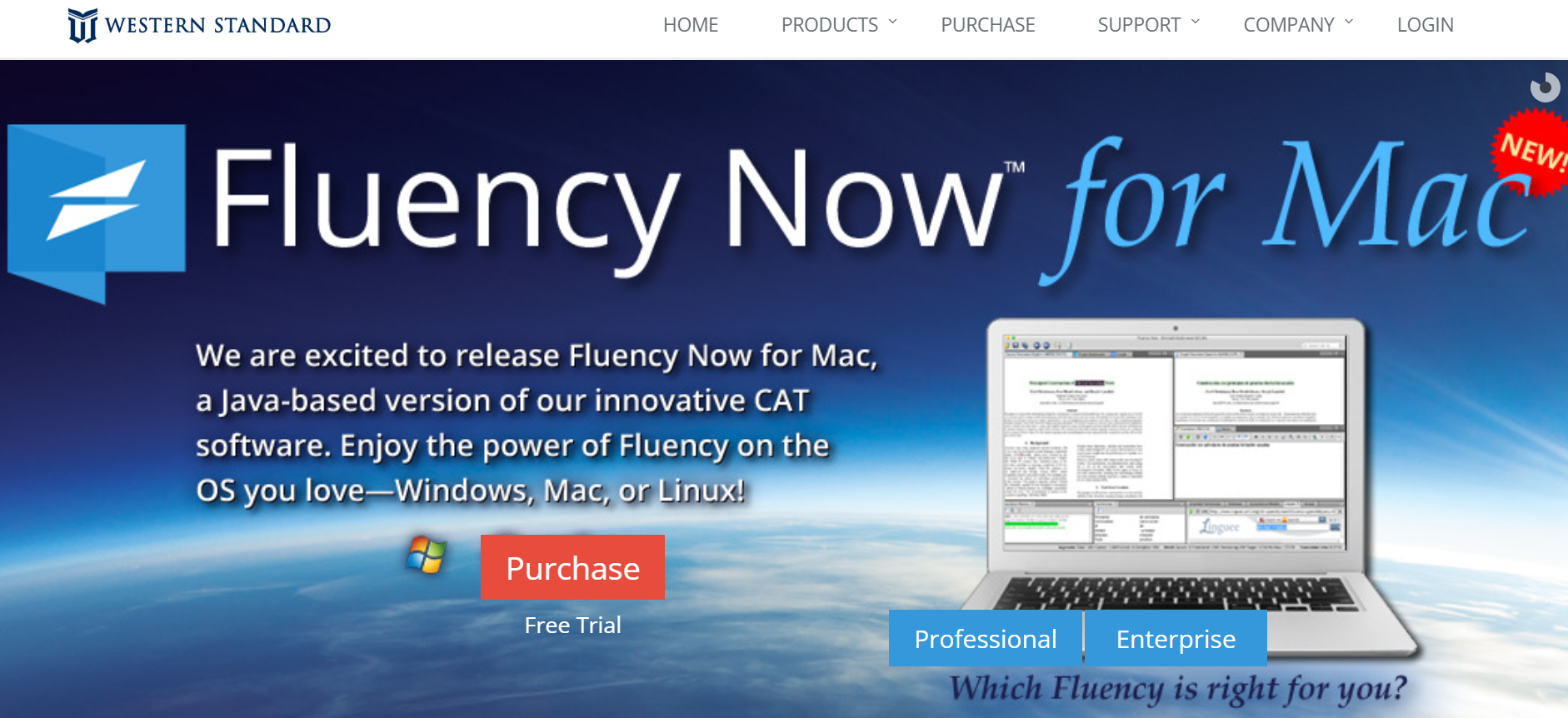
The final entrant in our list of translation tools is Fluency Now from Western Standard. You can use this innovative CAT software on Windows, OSX, or Linux, to help you translate faster and earn more – or else enjoy more free time. It’s easy to use, with most translators ready to begin translating with it in just ten minutes.
The nifty Fluency Now AI translation tool also allows you to work with multiple machine translation engines, with the results displayed in one window for maximum efficiency. It’s a great option for translators working on highly sensitive projects as well, as the Fluency Now servers are compliant with HIPAA and HITECH standards.
You can try Fluency Now for free for 15 days, including access to all of its features, to assess whether it is the right translation tool for you.
Considerations for choosing the right translation program
Choosing the right translation program is a big deal. Get it right and you can work more efficiently, delivering faster and with greater accuracy. Get it wrong and you can end up in a frustrating mess, watching your time – and income – drain away before your eyes. That’s why it is so important to factor in all of the following considerations when choosing the right translation program.
Budget
Set your budget based on what you can afford, then be firm about sticking to it. Translation tools are many and varied, so if you do your research carefully you’re likely to find several options within your budget – even if your budget is zero.
Ease of use
A translation tool that is a pain to use is hardly going to make you look forward to the daily grind. As such, take full advantage of free trials until you find a tool that’s easy to use and that won’t make you dread turning on the computer every morning.
Compatibility
The type of computer you use and the other tools and programs you use will determine what you need from your translation tools in terms of compatibility. Note down everything you need your tools to be compatible with and don’t buy or sign up to anything that doesn’t tick all the right boxes. Incompatible software can end up being a major headache.
Collaboration
If you’re going to be working as part of a team, make sure you consider the collaboration aspects of any translation tools that you’re thinking of using. Awkward team working functionality can lead to project delays and mistakes, so be sure to find a tool that meets your collaboration needs.
Productivity
The translation tools listed above can all help boost your productivity. However, if you’re struggling to be as productive as you would like to be, you can also check out our list of five productivity tools for translators, to ensure you’re working as efficiently as possible.
FAQs
How do translation tools handle linguistic diversity and dialects in languages with widespread geographic use?
Translation tools often incorporate extensive databases and language models that cover a variety of dialects and linguistic nuances. For languages with widespread geographic use, developers may include specific variants or offer customizable settings to ensure the translation tool can adapt to different dialects and regional linguistic features.
Can these translation tools integrate with other software or platforms to streamline translation workflows?
Many of the top translation tools offer integration capabilities with popular software and platforms. This allows for streamlined workflows, where translations can be directly applied in content management systems, development environments, or other applications, enhancing efficiency and productivity for translators.
How do these tools ensure the confidentiality and security of sensitive documents during the translation process?
Translation tools prioritize confidentiality and security through various measures, such as encryption, secure servers, and compliance with data protection regulations. Some tools specifically designed for sensitive documents might offer additional layers of security, ensuring that data remains private and secure throughout the translation process.
Conclusion
If you want to make the most of your expertise and deliver translations faster, there is a wealth of resources out there to help you. Why not try out some of the above and let us know how you get on?
Remember, too, that Tomedes is here to help with business translations for a huge range of languages. If you’re a business customer, our software translation services elevate your global strategy at a great price.

Written by Ofer Tirosh
Connect on LinkedInOfer founded Tomedes in 2007 and now leads the company's push to combine two decades of human translation expertise with AI. He writes about where the language industry is actually heading and the shifts nobody's ready for, the bets that paid off, and the ones that didn't.
Share:

Post your Comment