 Add text to get the translation that 22 AI models agree on


The 80/20 Rule of Translation: Which Content Actually Needs a Human?
If you are a global brand manager or e-commerce director, you are likely facing the "Volume Paradox." You have millions of words to translate (product descriptions, user reviews, help articles) but your budget only covers a fraction of them.
In the past, you had two bad choices:
Translate everything with humans (Bankruptcy).
Translate everything with AI (Brand reputational damage).
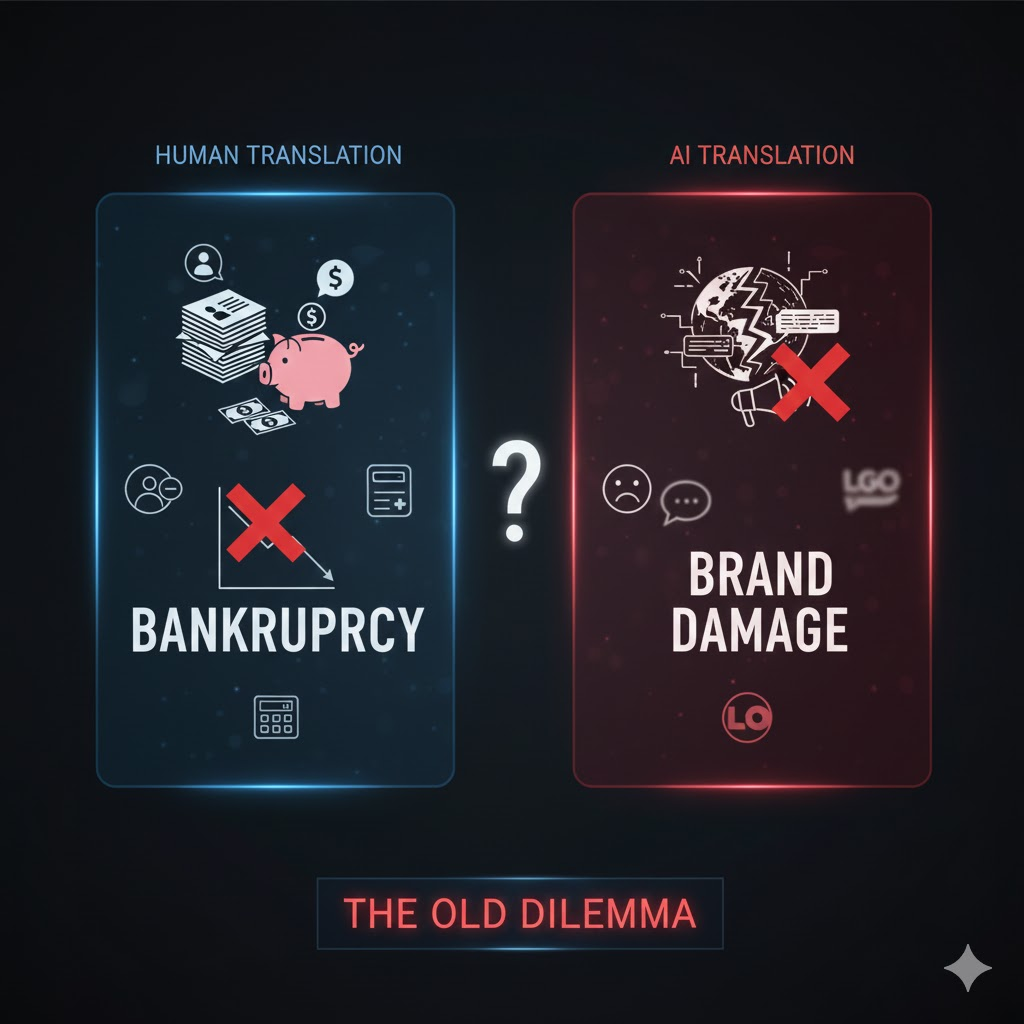
In 2026, there is a third option. It is called the 80/20 Hybrid Model, powered by a technology called Quality Estimation (QE).
This strategy suggests that 80% of your content is safe for automated publishing, while your human budget should be focused entirely on the 20% of content that drives conversion and trust. This approach is rapidly becoming the industry standard, with recent data showing that strategic AI adoption can reduce localization costs by up to 50%.
Here is how to stop wasting money on "over-translating" and start building a scalable engine.
What is the 80/20 rule in localization?
The Pareto Principle (80/20 Rule) states that 80% of your results come from 20% of your efforts. In localization, this means 20% of your content drives 80% of your revenue.
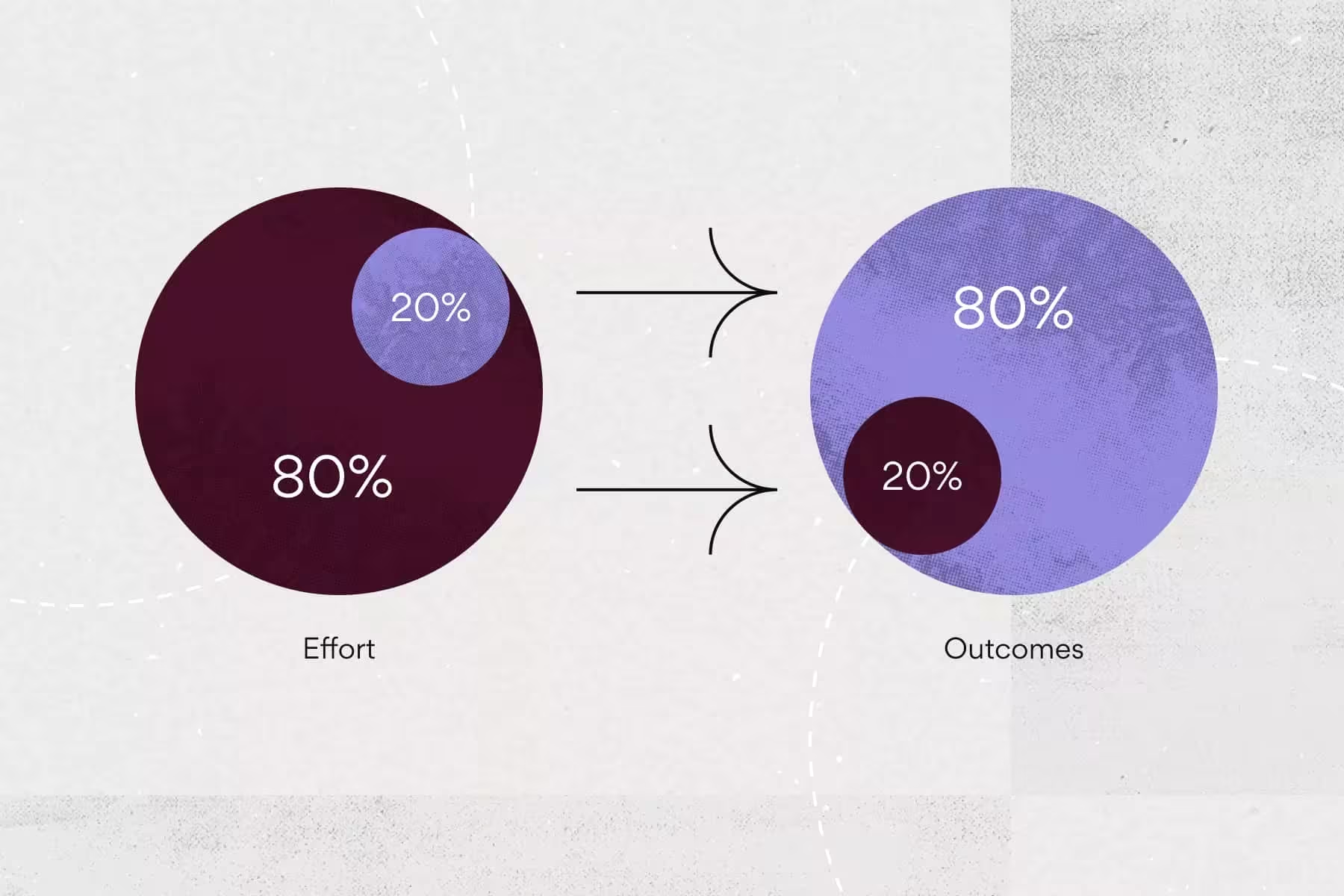
Think about your website traffic:
The 20% (High Value): Your Homepage, Checkout Page, and Best-Seller Product Titles. These pages have high traffic and high conversion intent.
The 80% (Low Risk): User Reviews, FAQ pages, Low-Traffic Product Descriptions, Footer Links. These pages are informational, and users forgive minor errors.
The Mistake: Most brands treat these two categories the same. They pay the same "per word" rate for a CEO's letter as they do for a user review of a pair of socks.
The Solution: Split your workflow. Automate the 80% with high-confidence AI, and reserve your human experts for the 20% that creates value.
Tomedes Data: Clients who adopted this tiered strategy in 2025 reduced their overall localization spend by 35% while increasing their content output by 3x.
How does Quality Estimation (QE) scoring actually work?
How do you know which AI translations are safe to publish without a human looking at them? You don't guess. You use Quality Estimation (QE).
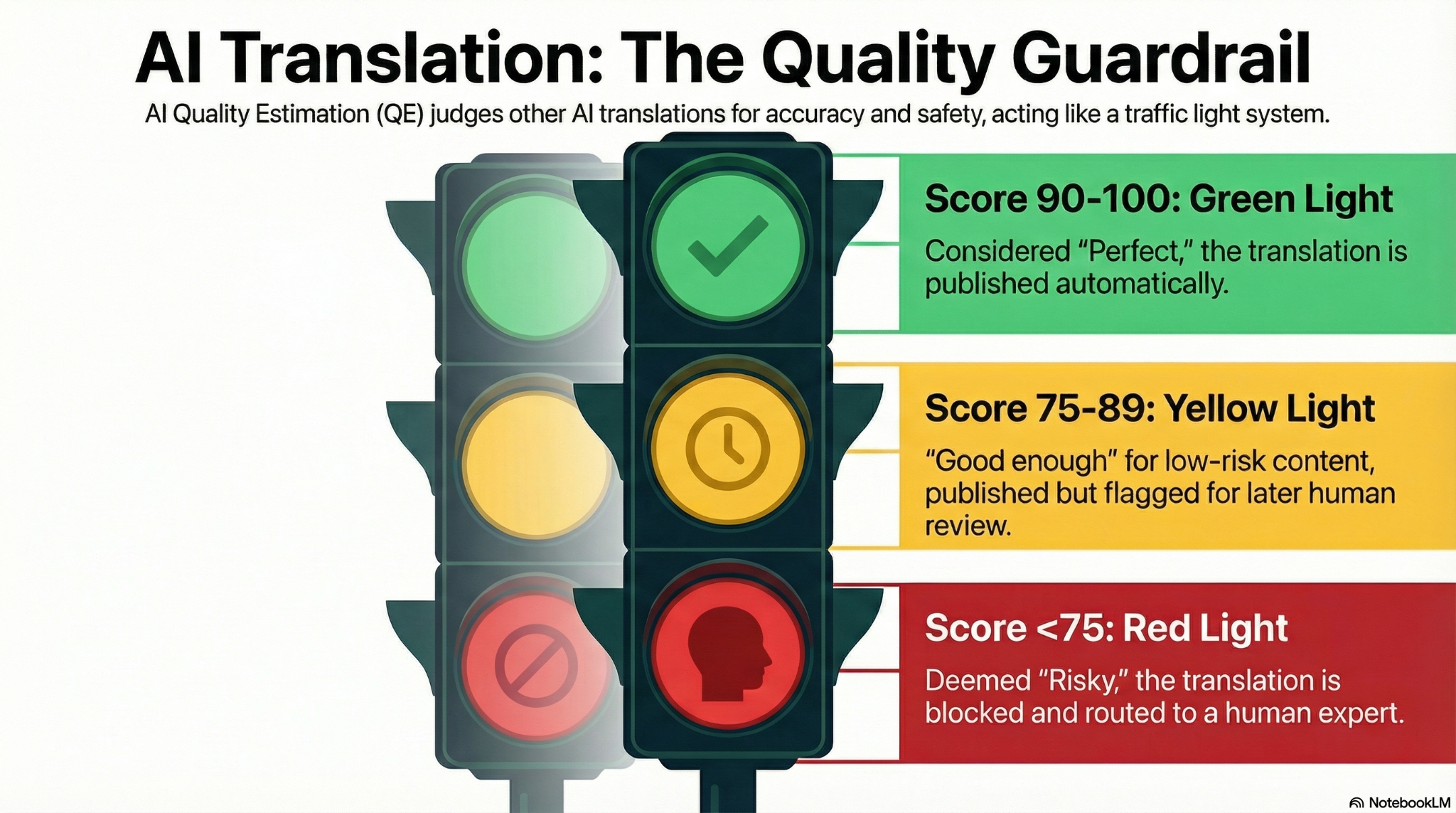
QE is an AI model that judges other AI models. When Amazon Nova or DeepL translates a sentence, a QE system assigns it a Confidence Score (0-100). This technology has evolved significantly, with new research from Google suggesting that AI can now evaluate translation quality with near-human precision in many contexts.
Green Light (Score 90-100): "Perfect." The system publishes it automatically. Cost: $0.
Yellow Light (Score 75-89): "Good enough." Published for low-risk content (like reviews), but flagged for later review.
Red Light (Score <75): "Risky." The system blocks the translation and routes it to a human expert for manual fixing.
This technology is the filter that makes the 80/20 rule possible. It acts as a safety guardrail, ensuring you never publish gibberish.
Which 80% of content is safe to automate?
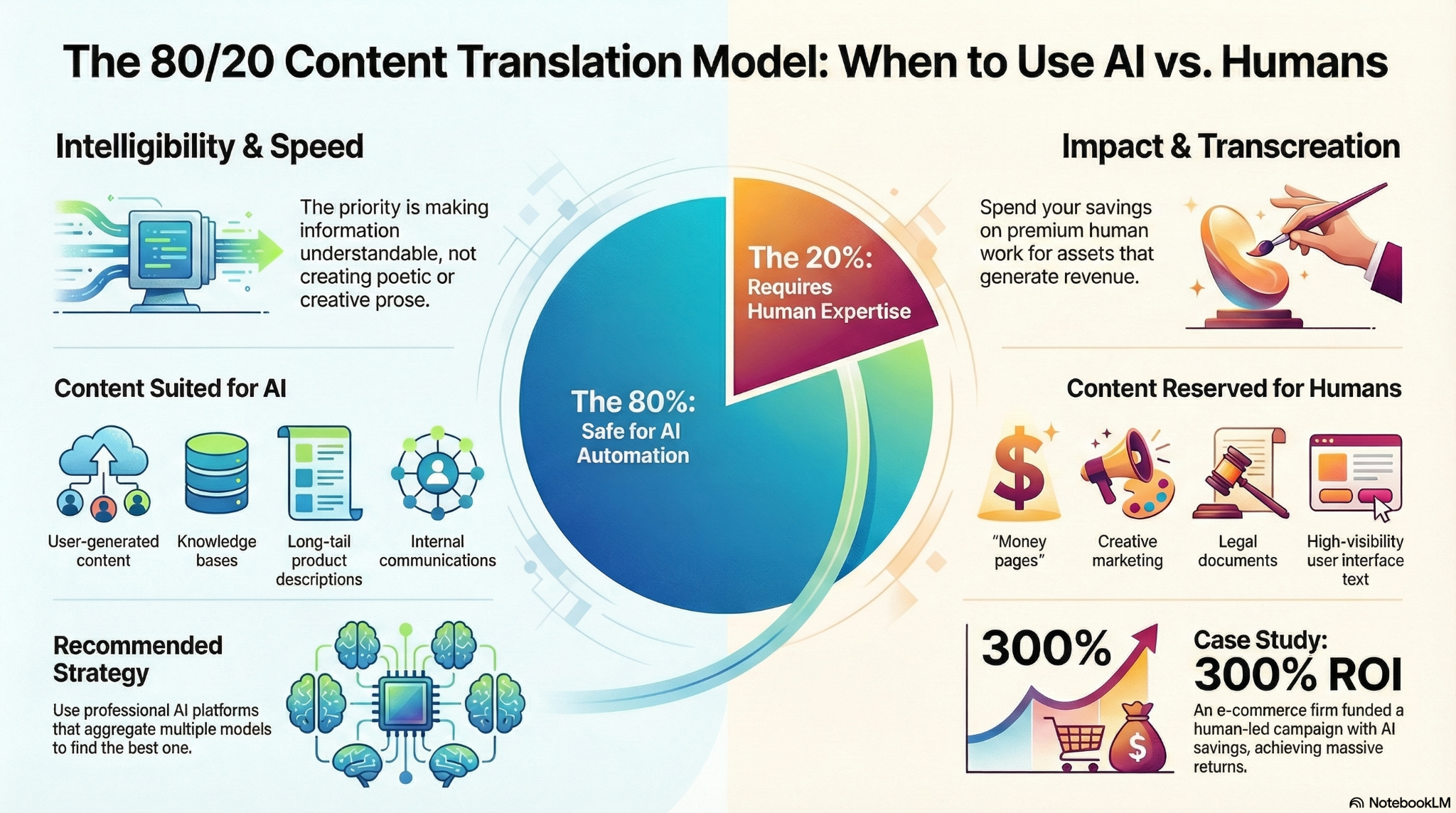
For this content, speed and volume are more important than "poetry." Your goal is intelligibility – does the user understand the information?
Use "QE-Managed" AI workflows for:
User-Generated Content (UGC): Reviews, forum posts, and comments. Users actually prefer raw speed here over polished prose.
Knowledge Bases: Help center articles where the goal is solving a technical problem quickly.
Long-Tail Product Descriptions: SKUs that get fewer than 100 views a month.
Internal Communication: Slack messages, non-legal memos, and training transcripts.
Strategy Note: For this tier, use professional AI translators that aggregate multiple AIs in one platform to find the best-performing model for your specific language pair (e.g., DeepL for German, Moonshot for Chinese).
Which 20% of content absolutely requires a human?
This is where you spend your savings. Because you aren't paying humans to check millions of low-value words, you can afford premium transcreation for the assets that actually make money.
Use "Human-at-the-Helm" workflows for:
The "Money" Pages: Homepages, Landing Pages, and Checkout Flows.
Creative Marketing: Slogans, Video Scripts, and Ad Copy. (AI cannot understand irony or cultural humor).
Legal & Compliance: Terms of Service, Privacy Policies, and Contracts. (A mistranslation here is a lawsuit waiting to happen – read about the $71 Million mistake).
High-Visibility UI: Buttons and Navigation menus. A button that says "Execute" instead of "Submit" can kill conversion rates instantly.
Case in point: A European e-commerce giant used this model to launch in Vietnam. They used AI for 50,000 product descriptions but used human copywriters for their "Lunar New Year" campaign. The result? A 300% ROI on the campaign, funded entirely by the savings from the automated descriptions.
Why is the "Just in Case" model obsolete?
The old way of translation was based on fear, checking every word "just in case" it was wrong. The new way is based on data.
By using QE Scoring and the 80/20 rule, you stop paying for unnecessary human labor and start investing in strategic growth. You can launch in 10 languages for the price of 2, simply by knowing where to let the AI drive.
Ready to audit your content? Get a Free QE Assessment Let Tomedes analyze your website and tell you exactly which 80% you can automate today.
FAQs
Q: What is a good QE score for automation?
A: Generally, a score of 85/100 or higher is considered "publishable" for standard e-commerce content. For sensitive legal content, we recommend a human review regardless of the score.
Q: Can QE detect brand tone?
A: Standard QE checks for grammar and accuracy. However, you can train Custom QE models that learn your specific brand voice (e.g., "friendly," "professional") and penalize translations that sound too stiff.
Q: Does this work for all languages?
A: It works best for "High-Resource" languages (Spanish, French, German, Chinese). For lower-resource languages (like certain African or indigenous dialects), AI confidence scores may be less reliable, requiring a 50/50 human split instead of 80/20.
Q: How much money does the 80/20 model save?
A: On average, high-volume clients save 30-50% on their total localization budget. The savings come from removing the "human review" step from the bulk of low-risk content.
Q: Is Quality Estimation the same as Post-Editing?
A: No. Post-Editing (MTPE) means a human fixes every sentence generated by AI. QE means a human only sees the sentences that the AI is "unsure" about. QE is significantly faster and cheaper.
Post your Comment