 Add text to get the translation that 22 AI models agree on


How to translate product labels into multiple languages
To translate product labels into multiple languages, collect the short label terms with a note on where each one appears, fix the list of languages, and have translators work each term into every language. Get the results back in a spreadsheet, and check that each one fits the label before printing.
I am the Global Client Solutions Manager at Tomedes. I believe the hard part is the context for each term, because a short word can mean several things, so I would send more context than feels necessary. This article uses one US manufacturer’s repeat orders as the example, drawn from the order record and a public review, with the customer’s details kept general.
Key takeaways
- Translating labels into multiple languages takes a few steps, which are gathering the terms, adding context for each, fixing the language list, receiving the translations in a spreadsheet, and checking fit on the label.
- The US manufacturer in this example sends short lists of terms by email or spreadsheet and asks for the same long set of languages each time.
- Translations come back as a spreadsheet or a Word file, and the customer places the text on its own labels, so no layout work is involved.
- A translator’s note about the wording of one term shows why context matters for short text.
- The order record does not show a stored term list, so consistency across orders is not documented.
How do you translate product labels into multiple languages?
Gather the short label terms, add a note on where each one appears, fix the list of languages, and send them to translators who work each term into every language. Receive the translations in a spreadsheet, and check that each one fits the label before printing.
- Put the short terms in one spreadsheet, with one term per row.
- Add context for each term, such as where it appears on the product.
- Fix the list of languages, with one column for each language.
- Have each term translated into every language, and ask the translators to flag any term that is ambiguous.
- Check each translation on the label before printing.
In my view, the order matters, because context settles the wording, the language list settles the scope, and fit can only be checked once the translations exist.
What does this look like for a US manufacturer?
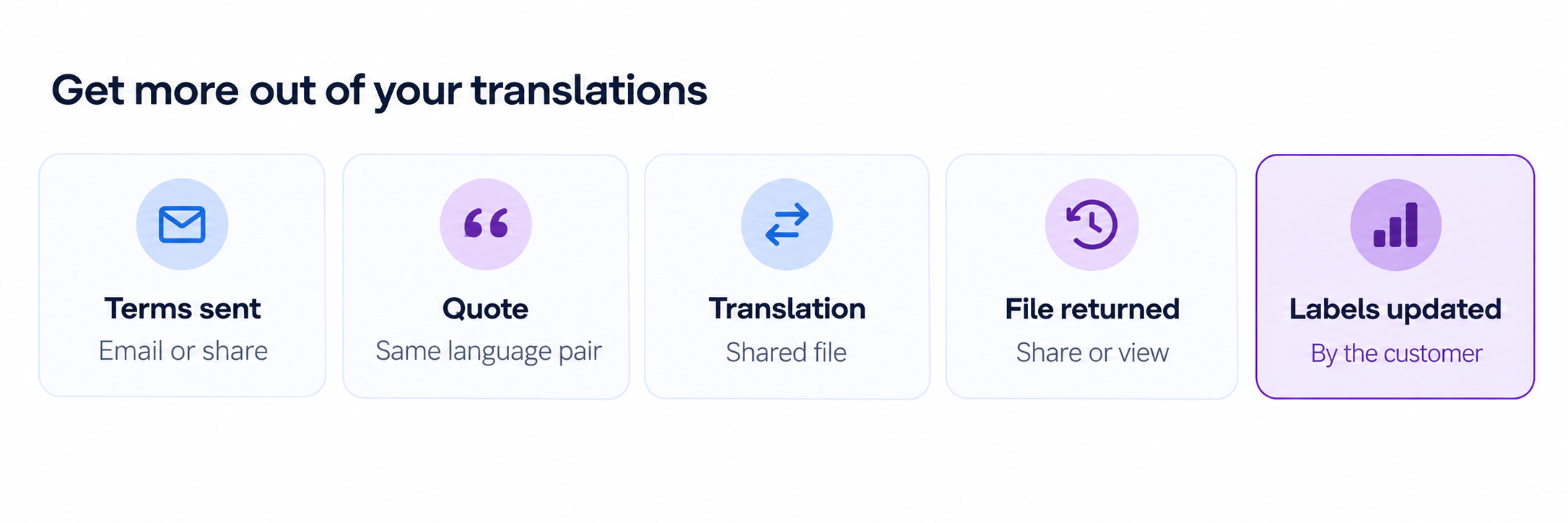
A US manufacturer sends a short list of product label terms, usually typed into an email or placed in a spreadsheet, and asks for each term in the same long list of languages. Tomedes returns the translations as a spreadsheet or a Word file, and the customer places the text on its own labels.
The jobs are small, with a handful of terms per order and no document to format. In my view, the small size is what makes the work easy to underestimate. For the wider picture of how manufacturers work with Tomedes, see our post on manufacturing translation for global businesses.
What the order record shows and what is still to confirm
| Topic | What the order record shows |
|---|---|
| The request | Short lists of label terms, typed into an email or placed in a spreadsheet |
| Languages | The same fixed list on every request, quote, and delivery file |
| Terminology | A translator’s note about the wording of one term in a recent order |
| Delivery | A spreadsheet or Word file, with the customer placing the text on its labels |
| Turnaround | Usually a few business days |
| Review | A public five-star review in October 2026, with general praise |
Why is a short list in many languages harder than it looks?
A short term carries little context, so one word can have more than one meaning, and every added language adds another chance to choose the wrong one. In a recent order, a translator left a note about how one term should be worded in Korean.
In my view, that note is how ambiguity in short text shows up in practice. A translator who has only a word to work with has to ask, and the answer has to reach every other language on the list.
How do you keep the same term translated the same way every time?
Keep a term list that records the approved translation of each term in each language, and send it with every repeat order. On this account, the language list stays the same on every order, but the record does not show a stored term list, so wording consistency is not documented.
In my opinion, a repeat customer with recurring terms should have a term list, because the same term should get the same translation each time. Tomedes offers glossary features among its tools.
How do you check that translations fit on the label?
Check each language on the label before printing, because some languages run longer than the source and a short term can overflow its space. On this account, the customer places the text on its own labels, so the fit check is the customer’s step.
In my view, fit should be checked before printing, because a correct translation that does not fit is still a problem. Customers who want the labels typeset in each language can ask about desktop publishing, and our guide to DTP translation services explains the step.
How long does label translation take?
Orders of this size are usually turned around within a few business days, and quotes come back quickly, according to the order record. In my view, a fixed language list and a short source text are what make that pace possible.
In my opinion, a quick delivery only helps if each term is right, so I would ask about the process before the deadline.
What did the customer say afterward?
In a public Trustpilot review posted in October 2026, the customer called the experience great, described the team as pleasant and eager to help, and said projects are done quickly and in a timely manner. The review does not mention labels, languages, or any specific job.
I read the review as general praise for the account, and it does not describe any one job. The review on Trustpilot is public, and I paraphrase it here.
What should I ask before ordering label translations into multiple languages?
Ask whether the same term always gets the same translation, how context for short terms is handled, which file format you will receive, and how long it takes. These questions matter more for short lists, because each term carries little context.
These are the six questions I would ask before the first order.
- Can I send context for each term, such as where it appears on the product?
- Will my terms be stored so the same term gets the same translation next time?
- How are ambiguous terms handled, and who do the translators ask?
- Which file format will I receive the translations in?
- Do I need to check the fit of each language on my label, and can you help?
- How long will the order take, and how is a short list quoted?
I think a short order deserves the same questions as a long one. As of November 2026, this account still sends its terms by email or spreadsheet, and the languages Tomedes covers are listed on the site.
If you have a list of terms to translate into many languages, send the terms, the languages, and any context through the quote form.
FAQs
Q: Can I translate a product label?
A: Yes, because label text can be translated like any other text, as long as each term is sent with context. On this account, the customer sends short terms by email or spreadsheet. The translators work each term into the same set of languages, and the customer places the text on its own labels.
Q: How can I translate text into multiple languages at the same time?
A: Put the text in a spreadsheet with one column for each target language, and ask a translation provider to deliver every language in one order with one due date. On this account, the language list stays the same each time, so each new order starts from the same set.
Q: Does context matter for translating short terms?
A: Yes, because a short term carries little context, so one word can have more than one meaning. Tell the project manager where each term appears on the product, and ask for the translators’ questions to be answered before the files come back.

Written by Denis Carvalho
Connect on LinkedInDenis manages client solutions for Tomedes' global accounts, where his job is simple to describe and hard to do: tell clients the truth early, then make sure the truth holds. He writes about what actually happens on a real translation project such as the timelines, the surprises, and the work that keeps a promise on schedule.
Share:

Post your Comment